Woodlands Awakening & Context for Poem “Echoes” (April 18, 2026)

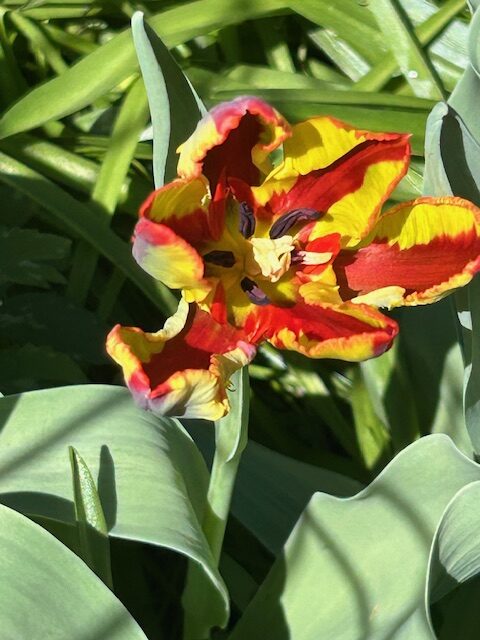
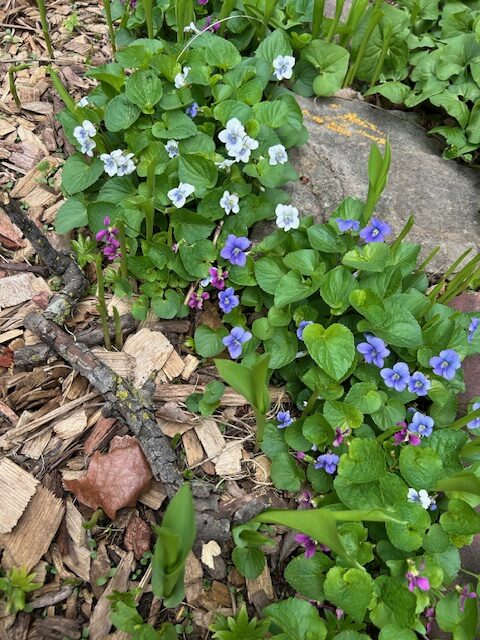
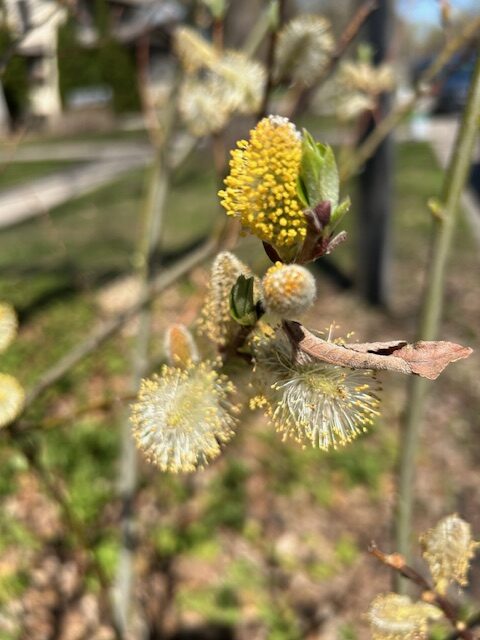
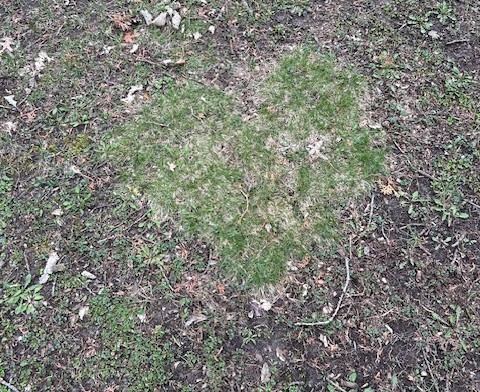
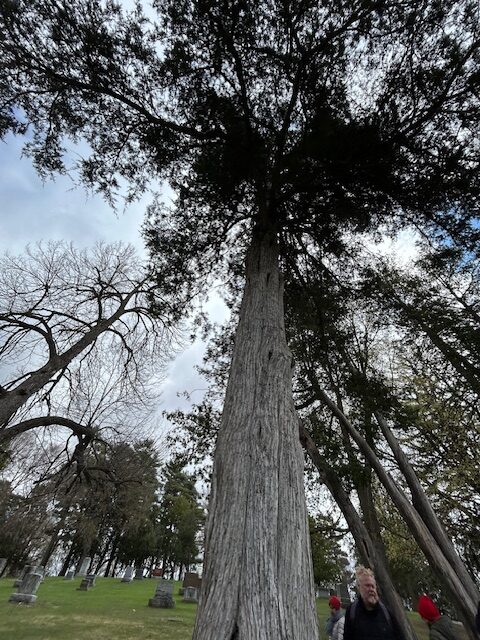
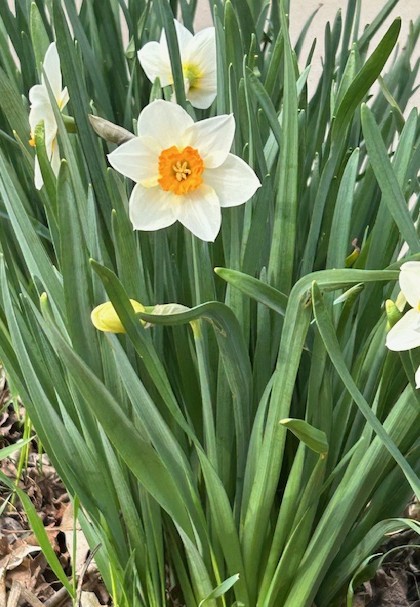
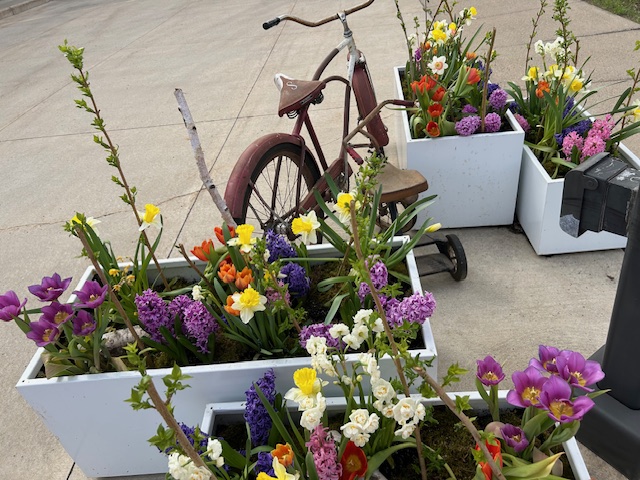
Three weeks ago, in late March, a friend and I spent an exhilarating afternoon in her woods outside of Northfield. For me, the excursion was an object lesson in the importance of looking closer. Even though it appeared that nothing was growing, it turned out that nothing was farther from the truth. In nooks, on logs, under last year’s leaves, the forest floor was rife with new and colorful life.

A particular thrill was to see, for the first time, the short-blooming Scarlet Cups fungus. Judy had been telling me about them for several years, but they had never been in season when I was visiting. This year, the timing was perfect.

We also saw other shelf fungus, including Turkey Tail.

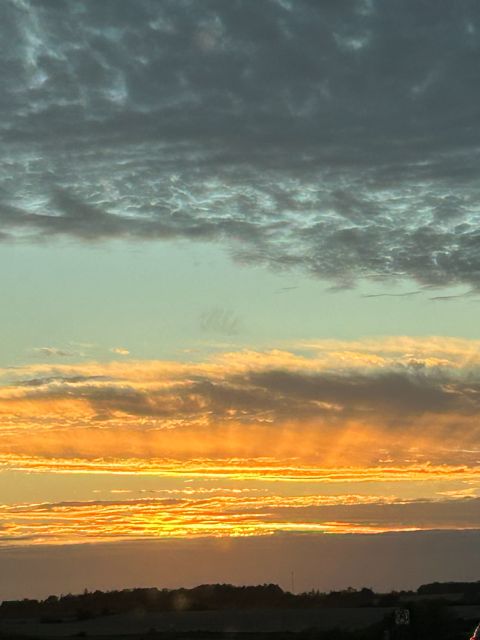
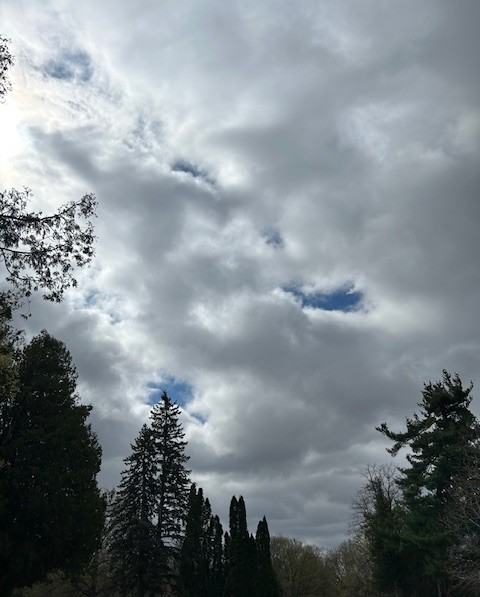
Even the sky that day revealed changing layers, grey from one direction, azure from another, with the Half Moon playing hide-and-seek behind breezy cloud vapors.

For me, the day taught me that it always pays to look more closely. Today, I am vowing to seek those dividends of delight.

Context for Poem “Echoes”:

This morning, I was thinking about how memories, even non-sonic ones, echo for me in the mind and heart. I have been looking over photographs in preparation for my daughter, Julia’s wedding, and some of these images have catalytic effects. Some help me recall people and places more than half-forgotten, while others show me things I did not perceive at the time–inside and outside the actual picture’s frame. The poem for today, “Echoes,” just sort of rose up out of a jumble of seemingly chance encounters with a particular important friend, someone who has a beautiful singing voice and who possesses the perfect echo chamber that she willingly shares.

Until tomorrow,

LESLIE
Happy National Haiku Day! Good News from Moonstone Art Center & Context for Poems “Morning Yolk ” & “Messages” (April 17, 2026)


Nudged by poet friend Lynn Gilbert (of Ann Arbor, MI and Pfleugerville, TX) I submitted the haiku I shared with you on April 10, “Enlightenment,” to the annual haiku anthology competition of Philadelphia’s Moonstone Art Center. I am so glad that I did! This haiku (which would not exist but for all of you) was accepted into the anthology. I will also be reading it at a virtual event on Sunday, April 19, 2026 (1:00 p.m. CST). You are all invited to attend.

Sunday April 19, 2026
 2pm – VIRTUAL

National Haiku Poetry Day

                 
 National Haiku Day, an initiative of The Haiku Foundation, celebrates the art form every April 17. A haiku is an ancient form of Japanese poetry that consists of three lines with the syllable structure “five-seven-five” — although this is contested for being a western way of teaching the haiku. Japanese haikus also count sounds, not only syllables. Haikus typically revolve around nature, the passing of seasons, or ephemeral beauty. At the risk of sounding like your high school English teacher, they rely more on images than metaphors. They’re also very concise, due to their short length.

To register for the reading–no cost–click HERE. To purchase a copy of the 2026 Haiku Anthology, take a look at Moonstone Arts Center’s site.

Context for Poems “Morning Yolk” & “Messages”:

Until tomorrow,

LESLIE
New York Library Lions & Context for Poem “Patience and Fortitude” (April 16, 2026)

Library Lions Bookends (Photo: Julia Braulick)

For decades before my first visit to the New York Public Library steps, I was enamoured of the Library Lions, those icons of literature that guard their entrance. These bookends, now in Julia and Andrew’s home, are ones I purchased forty years ago.

Yes, the lions’s dignified repose appeals to me. Even more, I respond to the names they acquired during the Great Depression: Patience and Fortitude–qualities I have been a long time in acquiring myself. In NYC, Patience looks to the south, toward the hallowed literary and artistic ground of Greenwich Village. Fortitude glances north, toward the glory of Central Park, an oasis of natural beauty with the incomparable Metropolitan Museum of Art in its center. One thing that I have learned is that to be any kind of an artist requires both virtues, and that one’s companions are essential in fostering them.

The New York Public Library’s website offers a wealth of history, fun facts, and whimsy surrounding this iconic pair, including reading lists for each, and a plethora of photographs of them bedecked with wreaths, wearing hats, and weathering time. There is even an invitation to send and/or create digital postcards with them at the center.

Here is a bit of swag I brought back for a friend, now a Northfield neighbor but for many years a resident of NYC.

Last September, I had an unforgettable first trip to New York City. Imagine it: taking a train from the country upstate, arriving at Grand Central Station to be met by an incredibly dear friend of the heart and the work, our first meeting in person! Then a few precious days of exploring at her side. Lynn knew that visiting the New York Library lions was high on my list. She led me there on foot, along a path I had never suspected exists: Library Way.

As we traveled from Park Avenue to Fifth Avenue along 41st Street, the marble facade of the New York Public Library’s flagship building gleams in the distance. Like a trail of fairytale bread crumbs, bronze plaques with literary gems gleam underfoot and led us on.

The full texts of all the plaques are available on the Library’s website. Each bronze is a unique artistic setting for a one-of-a-kind phrase. Below are a few images of my own favorites. (Who am I kidding? They are all my favorites!) And some images, too, of the rewarding journey’s end, appropriately at the base of more steps to climb.

Until tomorrow,

LESLIE
With Fortitude Close By (Photograph by Lynn Sara Lawrence)
Monumental Patience (Photograph: Leslie Schultz)

Tax Day Becomes Axe Day on My Block & Context for “Baraboo Haiku ” (Poem for April 15, 2026)

Yesterday, I snapped this picture of an ash tree on the edge of our driveway:

This morning, I awoke to the roar of chainsaws.

One never really knows what the new day will hold, what will suddenly topple or stand the test of time. Yet what occurs is always interesting to me, even if unsettling. Here is a bit of the downed tree I claimed from the pile in the street. It seems to me to comment on the hoped-for longevity of the porch pillars of our 1905 house.

Context for “Baraboo Haiku” for April 15, 2026:

Periodically, I stumble over my cache of vintage family papers. Remember when pencils and picture postcards and penny stamps carried the day? Antecedents for pix and pixels and posts on blogs such as this?

This postcard was sent more than 100 years ago from my father’s grandmother, Katherine Hinman Williamson Schultz to her daughter, Isabelle. Kate is an important daily presence in my life, although I don’t recall meeting her. I wore her dress when I married Tim. She was a professional musician–piano and organ–and was also the family poet. (Her high school diploma hangs on our living room wall and served as the template for the one we crafted for Julia.) I know her only through stories, through a few documents and photographs, and through lines written in her hand. (Her diary is in my possession. One of the last entries, in quavery ink, was on April 17, 1960, in which she notes meeting infant me.) Her kindnesses shine through the obscuring years between us. And this one ephemeral communication sparked today’s slight poem.

I think she would be happy to know that Julia, too, studied piano and voice, just like her own red-haired daughter, Isabelle.

In Kate’s honor, I wrote out the first draft of this poem in pencil. I hope those yoked camels wintered in arid Texas or Mexico.

Until tomorrow, and all it holds,

LESLIE

Local Trees and Context for Poem “Survivor” (April 14, 2026)

My understanding of the beauty and symbolism of the elm tree comes primarily from literature. Thoreau suffered when, in 1856, the Concord elm was cut down. Many novels and stories from earlier times cite the way elm trees arched over and shaded the streets of small town America. Sometimes their shapes were compared to fountains or wine glasses, green emblems of upward thrust and celebration.

None of this is part of my own visual vocabulary. I recall my girlhood confusion at the denuded city streets named “Elm,” yet it seemed I encountered one in every town. Perhaps that is why the title of Wes Craven’s 1984 film, “Nightmare on Elm Street,” has an eeriely apt echo of the macabre?

We are lucky to have a single example surviving on the boundary line between our property and the lot next door. Elm trees can live, they say for hundreds of years unless brought low by fungal pathogens. I hope this one outlives my human span. I’m pleased to say that the prognosis is good.

(The image above is of an ailing ash tree on the southeast corner of our driveway.)

Until tomorrow,

LESLIE