April 23, 2018 NaPoWriPo Challenge Poem: “Half-Moon Set–Sonnets for William Shakespeare”

Half-Moon Set
for William Shakespeare

I  Oxford English Dictionary

Sir James Murray, caught fast in webs of word,
sought the earliest spinners of our pages.
You, Will, our most daring, can still be heard
in hundreds of words you gave to the ages.

I recall that long table holding green,
heavy volumes in the main library
where I first pondered: What did Falstaff mean
by “dwindle?”  In tiny print, the O.E.D.

cited you as coiner. From Scottish, “dwine,”
(“to waste away, to fade”) you gave a twist,
conjoined it to “kindle,” and made new wine
with a flick of your vintage plume, your wrist.

Thank you for “Zany.” “Green-eyed.” “Howl.” “Moonbeam.”
“Grief-shot.” “Honey-tongued.” “Madcap.” And “academe.”

II  Tinkerer’s Damn

Sometimes it’s finding the right word. Sometimes
it’s making it. Fit an old stem with ends
we know. Solder nouns onto bright verbs. Rhymes
and rhythm and thought give old words twists and bends

with ease. They please us, these shiny new toys
cobbled and seamed, buckets and kettles sturdy
yet handy, able to transport vast joys,
woes, or curses without being wordy.

In this sublunary world, can we know
where perfection exists or if we make it?
Poets, anyhow, keep tinkering under moonglow,
willing to be fooled, or to fool, or to fake it.

Our half-dark, half-light moon—inconstant sphere—
urges whatever it takes to make things clear.

Leslie Schultz

Yesterday, a friend asked me what makes a poem a poem, and I could think only of partial answers to that keen question. This morning, I was lucky enough to be awake when the half-moon set in the early hours of one of the high holidays on my calendar, Shakespeare’s birthday, so I am  thinking about what I have received from Shakespeare’s poetry–and, by that, I mean all of his inventive language whether crafted in sonnets or for the stage. I realize that it is the exhilaration of his verbal dexterity (marrying sound and sense with flair) and his daring in creating new (or new-ish) words when the one he wanted did not exist…His converting, disconcerting, diverting achievements–at the level of one word at a time–in service of the sonnet, the scene, or the play. That inventiveness gives us all new raw material and new license to dismantle and reassemble language.

We can’t know exactly which late April day on which William Shakespeare was born in 1564, only that it was near and before the recorded day of his baptism on April 26. (Since he died on April 23, 1616 there is a fitting symmetry in celebrating his birth on April 23–a kind of calendrical couplet encapsulating the shape of his work and life, like the way he chose to conclude the sonnets he wrought.) Similarly, we cannot know exactly how many words he invented on the spot and how many he simply seized on, used effectively and memorably, and is now credited as their coiner. Even conservative estimators, though, acknowledge more than one thousand “neologisms.”

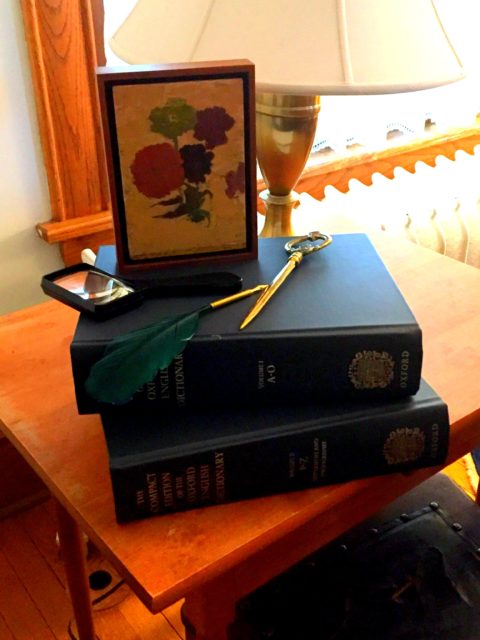
I learned the term “neologism” during a magical undergraduate year when I studied Shakespeare’s canon at the University of Wisconsin under Professor Standish Henning. He directed students through the portals of Memorial Library, past the carved dictum, “The truth will set you free,” and into the Reference Room toward the incomparable resource of the Oxford English Dictionary. (As soon as I could afford it, after graduate school, I purchased my own copy of the condensed print version, complete with magnifying glass.– I didn’t used to need that, but now it comes in handy!–and I have yet to fulfill my intention of acquiring a copy of Caught in the Web of Words, the biography of Sir James Murray, chief editor of the Oxford English Dictionary,by his granddaughter, K.M. Elizabeth Murray, but it is comforting to know that pleasure shimmers before me.)

Image result for university of wisconsin memorial library

Coming back to my friend’s question, I think the essence rests in the desire to make something new, to enrich the given language in some way. “Poet,” I understand, comes from the Greek word for “Maker.” I know I am inspired by what I have read and heard–surely millions of words–and by such delightful local twists as Northfield’s Sidewalk Poetry motto “Make Your Mark” and Paula Grandquist’s coinage for the name of her show on KYMN, “ArtZany.” (Tune in this Friday at 9:00 a.m., by the way, to hear Paula talk with this year’s winning poets and hear them read their work–or find it on the KYMN online archive after Friday, April 27, 2018.)

What do you think? What is the essence of poetry? How do you know something is a poem? Have you recently invented a word or phrase? Is there one you wish you had? (I wish I could take credit for “Snafu,” “Kludge,” and “Glitch.”)

As Paula says, “Enjoy your imagination today.” Best, Leslie Schultz

Check out other participants in the NaPoWriMo Challenge!

April 22, 2018 NaPoWriMo Challenge Poem: “Sunday Postcard to the Past”

Sunday Postcard to the Past
Earth Day, 2018

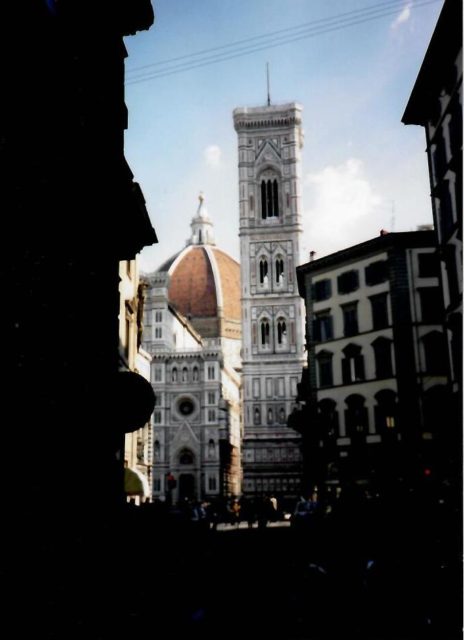
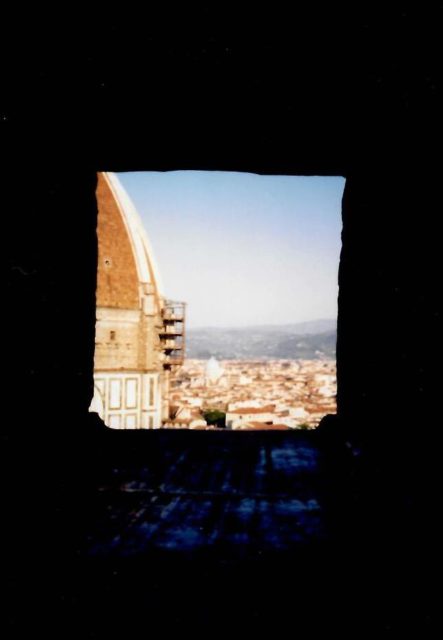
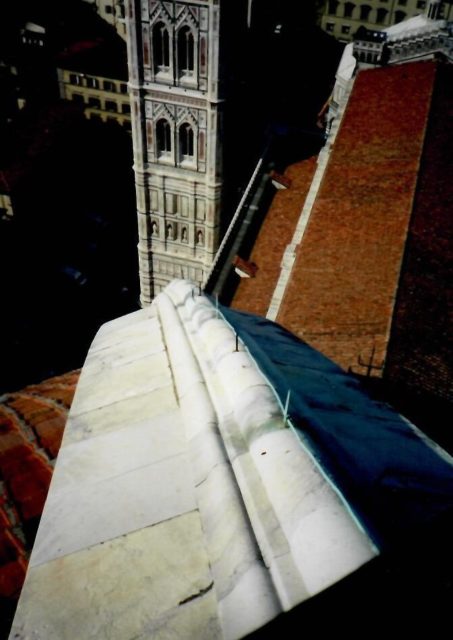
Sited by Giotto, best viewed from the east,
as sun rises over the green-rimmed bowl
of Florentine hills, you, bell tower, stand
alone in your old, sacred neighborhood,
lofty as a basketball player or
factory chimney. Sonic silo, housing
seven named bells, we climbed your four hundred
steps sometime in the last gone century.

It was early. We were happy, younger,
open to every view. You, campanile,
dressed in spumoni marble appliqué
without, were rough-hewn within: gritty, dim,
stronger than centuries or human life.
I remember—at each stage, as we climbed—
looking down through your center: your timbers
black as iron with age, your bells silent.

Leslie Schultz

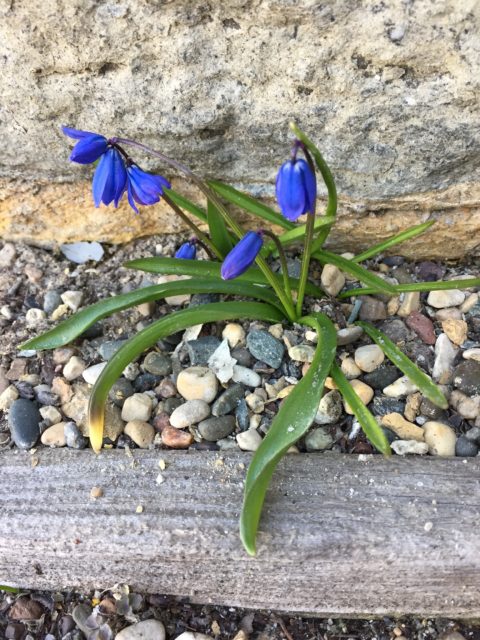
Wishing you a warm and relaxed Earth Day! Fittingly, this first Siberian scilla bloomed today, along the rough edge of our limestone foundation. May new ideas bloom for you today, whatever your climate.  Leslie

Check out other participants in the NaPoWriMo Challenge!
April 21, 2018 NaPoWriMo Challenge Poem “Ragnarok”

Ragnarök

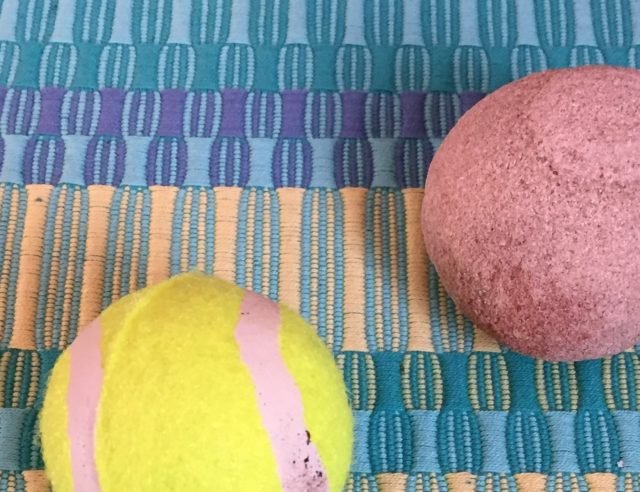
Father, you handed me the rough sphere
about the size of a tennis ball.
In my small hands, I turned it over.
You took it, placed it on concrete,
struck like Thor with your heavy sledge.

It was, you said, a thunderegg,
or might be. You loved Oregonian
geology, the tide pools and lava flows.
This disappointing specimen
crumbled like ash under your blows.

No frozen moonscape/seascape/
landscape inside, no milky eye.
You gave a sigh and turned
for a swig of beer, a rare one,
then crushed the empty can in your hand.

We lived, that year, across the rush
of traffic, from a park
with civic tennis courts,
swings, and childish slides,
frequent thunk-thunk of hit balls.

They look ordinary, you’d explain.
Not agate or geode exactly but some
mysterious matrix of confluence
from those firey thrusts of the dim past,
the slow drip of underground rivers…

You’d tell the tale you did not
remember—pale mammal, scientist,
half-blind like Odin—as if you were there,
and I can still see you, hefting your lightning,
striding the now-riven world.

            Leslie Schultz


Check out other participants in the NaPoWriMo Challenge!
April 20, 2018 NaPoWriMo Challenge Poem: “Exquisite Silence”

Exquisite Silence

I recall the first time
we were enfolded
by the fabled acoustics
of this extraordinary place
called Ordway.
Panels of glass
pressed out against
the box of night air.

No visual distractions here,
icy interior, cathedral
of beige and frost.

Lights lowered. There
was applause. Then
the mime, most famous
in all the world, came
out from the velvety blackness
into the lemon-hot spotlight
and took us all in,

his expressive eyes,
piloting the changeable
moon
of his white face.

We could have heard
a pin
d
r
o
p
!

I
think we
did.

Leslie Schultz

Check out other participants in the NaPoWriMo Challenge!
April 19, 2018 NaPoWriMo Challenge Poem “Black Kites”

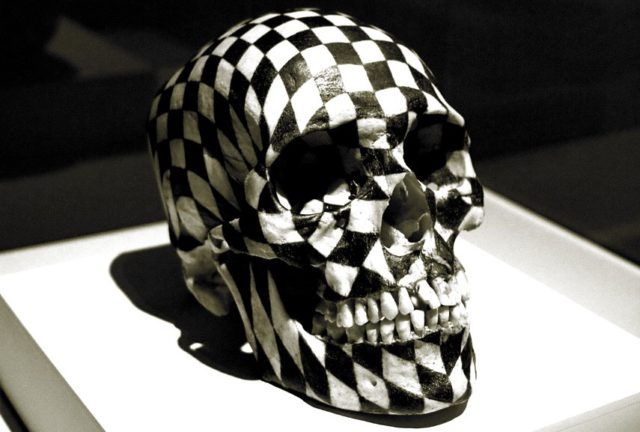
“Black Kites” (1997) by Gabriel Orozco

Black Kites

What I’m after is the liquidity of things, how one thing leads you on to the rest… The works are about concentration, intention, and paths of thought: the flow of totality in our perception, the fragmentation of the river of phenomenon.  Gabriel Orozco

The face of death. Herein lies emptiness,
The open maw of a still unfilled vase.

Are they bird-hollow, the bones of happiness?
Constructions wrapped around the voids of space,

Swallowed by or swallowing snaky time,
Stillness reverberating under fronds,

Caught in the knotted lattices of rhyme?
What the pencil aims to capture absconds,

Dashes into the underbrush of thought.
How can we remember that we will die?

Look at the old photos. See where you ought
To be now: On the outskirts, asking why

You were born? Or dead-on and central, quite
implicit in this dance of black and white?

Leslie Schultz

I first encountered the work (“Black Kites”) by the conceptual artist Gabriel Orozco at the Philadelphia Museum of Art, a great ark of art history on the banks of the Schuylkill River. His powerful memento mori was created with graphite pencil on the blank white curved surface of a purchased skull after a life-threatening illness arrested his attention.

The photograph of my great-grandmother (Clara Pressel) and her daughter-in-law (Marie Pressel–my grandmother) with neighbor Raidibelle Krueger in the middle was taken near their compound on the banks of the St. Lucie River in Florida, on the Atlantic coast. These women of my family are all dead now, of course, but as I remember them dimly they somehow live on, like an underground river below the dome of my own cranium.

This sonnet homage is broken into faux couplets to reflect the interlinking of shadow and light, memory and aspiration, one never existing without the other.

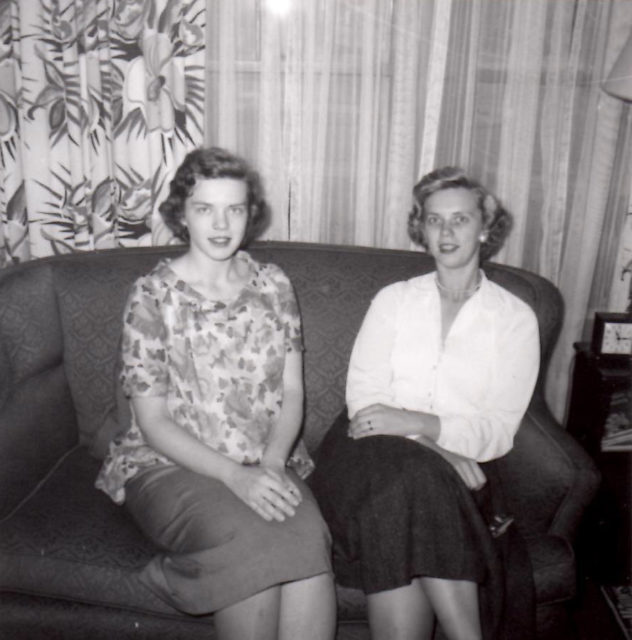
“Hibiscus Drapes” (1959)–Mom, pregnant with me, seated with Aunt Shirley)

Check out other participants in the NaPoWriMo Challenge!