Reading By The Onion Sea: Julia Denne On The Riches of Russian Literature

 Julia Denne Two

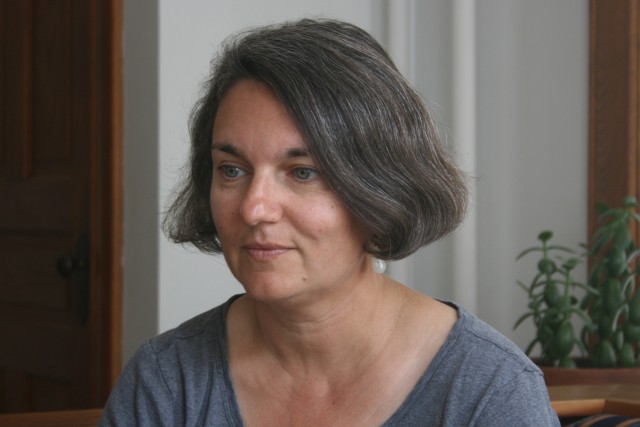
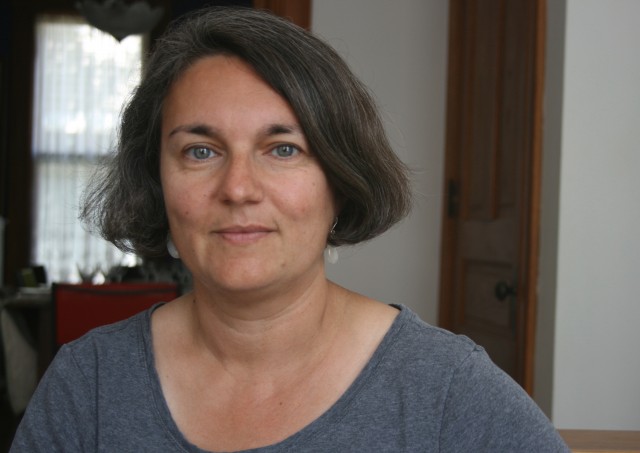
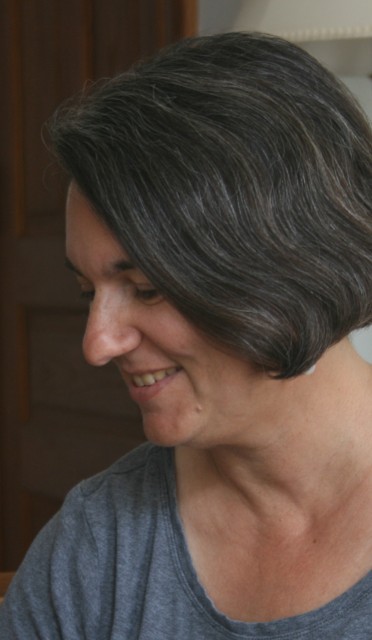
Julia Kriventsova Denne is a teacher of Russian literature and Russian language based in the Chicago area. She teaches several classes (at several Chicago-area sites and via the internet) for teenagers and adults, promoting an appreciation of Russian history, literature, and language. Denne studied linguistics and literature at St. Petersburg University in Russia. In 2005, she started the Life Readers: Classics Study Group at the Arlington Heights Memorial Library for people interested in serious, longer works, and she has been teaching seminars at the Newberry Library in Chicago since 2007. In addition, she has taught Russian Literature, history, and film for gifted homeschooled teens in the Chicago area. Last year, she launched her website, By the Onion Sea, in order to teach online literature classes for teens and adults. (For a full and fascinating explanation of the name, click here.) Besides literature, Denne offers instruction in the Russian language, and her students have won numerous prizes at the Olympiada of Spoken Russian and the Russian Essay Contest.
Julia Denne 1 Trim

Until I met Julia, in 2007, the deep and thought-provoking world of Russian literature was closed to me. For this subject, I needed a teacher! Through her expert and generous guidance, I have become acquainted with many authors who have enriched my life. My daughter, too, now studies with Julia Denne, and is learning to think and write with increasing depth about the structures and intriguing ambiguities that make great literature so challenging and rewarding. I was very happy that our teacher agreed to respond to a few questions, and I hope you will enjoy this peek into the literature of another part of the world. Be sure to scroll to the bottom for a list of her top ten recommendations! (Note: The illustrations interspersed throughout the post were all selected by Denne and are in the public domain.)
Julia Denne Three

You grew up in Petersburg, Russia. Would you describe your training in literature? How does it differ from what most of your students’ backgrounds?

I was studying English, literature and linguistics at the St. Petersburg University in the 1980s. It was the Soviet time called “the period of stagnation” when it was illegal for me to read Nabokov on the subway. I read it anyway, in English, so few people could understand what I was reading. At the University, I had a very formal and traditional approach to studying literature. Reading was emphasized: my summer reading list had more than 50 works, some of them quite substantial. We started with the Ancient Greeks and made our way through the Middle Ages, Renaissance, and Enlightenment to the mid-20th century. I wrote papers, but all my literature exams were oral. If I didn’t read something well, the professor was fast to discover it, almost immediately. Nothing could save me, and so I did my reading. I remember discovering Diderot and talking my friends into reading his novels. I find such chronological comprehensive reading to be a great advantage to my teaching now. Frequently, it is possible for me to see how the cultures and writers connect, and putting pieces together gives some clues that make our discussions thought-provoking.

Gogol "The Government Inspectors" (Artist: Boklevsky, 1863)

Gogol “The Government Inspectors” (Artist: Boklevsky, 1863)

Could you comment on the rewards and frustrations of introducing Russian literature to American students? Since you teach all ages, does this differ with the students’ age?

I am always amazed by how fast my students grasp the smallest cultural and historical details right after my explanations. Though most of them have never been to Russia, it doesn’t prevent them from loving and understanding the literature, and of course that is very rewarding for me as a teacher. I love teaching my Newberry adult seminars. The participants come from all backgrounds, and most of them are very well-read and have interesting life experiences. This is reflected in our discussions, and I always learn something new from my students. Teaching teens is very different. They are more used to reading straightforward, plot-driven fiction or fantasy and science fiction novels, so Russian weird, idea-driven “baggy monsters” (Henry James’s characterization of works like War and Peace) puzzle them at first. That is why I prefer to start with short Russian fiction, which is still weird and idea-driven, but at least it’s easier to get used to. Everyone finds something that works for them in Gogol’s stories – the fantastic, the exaggerated reality, the grotesque, or the trivial that becomes not just banal, but evil. In reading the longer novels, younger students gradually realize that the thoughts that Dostoevsky’s or Tolstoy’s characters are struggling with are universal. “What is bad? What is good? What should we love and what hate? What do we live for? And what am I? What is life, and what is death? What power governs it all?” asks Pierre Bezukhov in War and Peace in one of the not infrequent periods of his life when everything “within and around him seemed confused, senseless, and repellent” (War and Peace, Book 2, Part 2). These are the same thoughts that have always occupied most teenagers. I have seen how younger students get engrossed in the so strange, but also so familiar life of the19th century Russia.
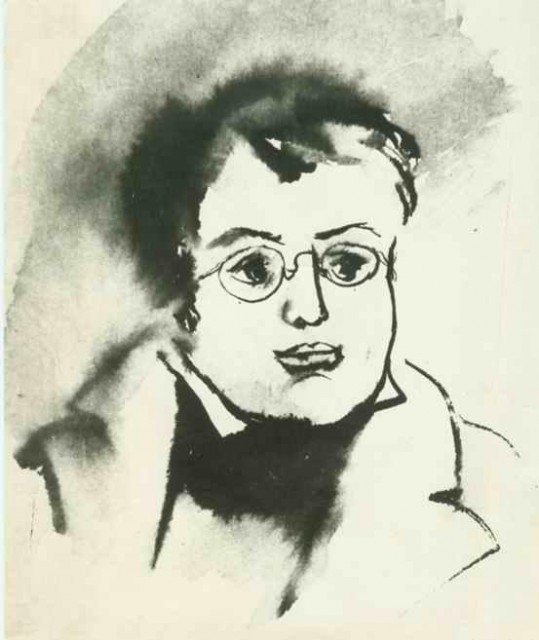
Tolstoy "War and Peace" (Pierre) (Artist: Nadya Rusheve)

Tolstoy “War and Peace” (Pierre) (Artist: Nadya Rusheve)

Regarding challenges, well, I may be wrong, but it seems to me that many younger students prefer reading fantasy and science fiction, living in some other worlds that have their own laws and affairs. Even Jane Austin’s novels present to them a fantastic world with very isolated structure and characters so different from modern people that they become comfortably unreal. Younger students are not as happy when the fantastic, the satirical, and the realistic remind them too much of the world they live in now. They are not used to it, and sometimes they struggle to distance themselves from such worlds by harshly judging the writers and the characters. My aim is to convince them not to dismiss a difficult writer but to understand the writer’s intention. I try to bring as much background information as possible to explain the time and the place so that students could imagine what life was like in a specific community. It is difficult for the young to see the gray and to get into the complexities of human nature. They want to solve the disturbing and the frustrating, which is not always possible.

Tolstoy "War and Peace" (Natasha's Dance) (Artist: Shmarinov)

Tolstoy “War and Peace” (Natasha’s Dance) (Artist: Shmarinov)

As a teacher of both language (Russian to native speakers of English) and literature, you have an unusual dual perspective. Could you comment the connections between literature and language?

When I start teaching Russian, I introduce Russian poetry right after learning the alphabet. We start with short children’s poems and progress to Pushkin fairly soon. Pushkin, Lermontov, Pasternak, and Akhmatova are primarily poets, and you can’t understand why Russians are so crazy about them from reading the translations. They used Western forms but filled them with Russian content, and translations frequently can’t do justice to verse. I actually have a student who decided to take Russian after she heard me read a poem in Russian during our literature discussion. Kids still memorize poetry in Russia, and my students do it as well. We discuss each poem in detail, and they learn to recite the poems beautifully. Many poems have been set to music. I have a student who has a beautiful voice, and she has recorded the songs she sings in Russian.

Would you comment on the link between reading and writing about what has been read?

Reading is more receptive, while discussing and writing about what one has read is more active. I structure my classes so that the students participate actively with what they have read. In addition to weekly class discussions, I ask students to write one paragraph of response each week. They can choose from a number of writing questions I provide as prompts. And I then share these reactions with the group. The immediacy of this helps the students distill something from their current reading, and it also helps me to realize which themes are understood less; interesting connections; a variety of opinions.

I also assign two longer formal essays for each semester class. As with the weekly paragraphs, students can choose from a long list of possible topics or propose their own. For each essay, I work with each student independently, providing extensive comments over several drafts. This allows the students to understand the necessity of revisions, and yields fewer–but better-written–essays.
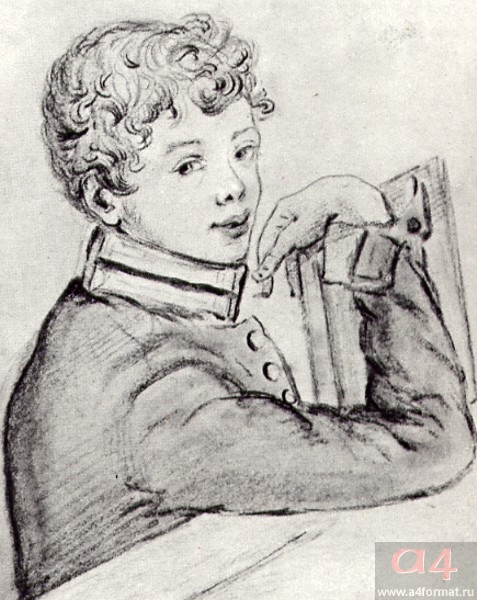
Tolstoy "War and Peace" (Petya Rostov) (Artist: Bashilov)

Tolstoy “War and Peace” (Petya Rostov) (Artist: Bashilov)

You teach students in person, one-on-one, in small groups, and in larger groups, both in person and online. Could you comment on the pros and cons of online versus in person instruction?

I prefer teaching Russian one-on-one or creating a very small group. When I tried teaching Russian to a larger class, I discovered that everyone learns languages differently. Some have better memories, others work harder. Some prefer learning grammar through tables, others need a lot of conversational practice to make grammar work. The individual approach becomes a necessity. For teaching Russian literature, I prefer larger groups which include adults and teens of different backgrounds and experiences. I emphasize discussion, and discussions work best not in a homogeneous group, but in a setting where a variety of opinions is introduced and commented upon.

Are you planning any new courses?

Yes! Online, I will be teaching Tolstoy’s War and Peace in winter/spring 2014 (registration is currently open), and I am preparing a couple of workshops for summer 2014: Dostoevsky’s Notes from Underground, which is a very challenging and disturbing novel that is essential for understanding Dostoevsky; Gogol’s The Government Inspector, which is the funniest comedy in the Russian language; and Turgenev’s First Love and Spring Torrents, which have powerful female characters and are beautifully written. In the fall of 2014, I will add a new course “Russian and Soviet History from 1900 to 1940 through Literature, Art, and Film.” We will read John Reed, Maxim Gorky, Zamyatin, Olesha, and Bulgakov and discuss Eisenstein, Pudovkin, Dovzhenko, and Vertov’s movies to examine life in the Russian Empire, the Russian revolution, and Stalin’s terror.

At the Newberry Library in Chicago, I will be teaching Tom Stoppard’s The Coast of Utopia in spring 2014 and Dostoevsky’s Petersburg Short Fiction in summer 2014.
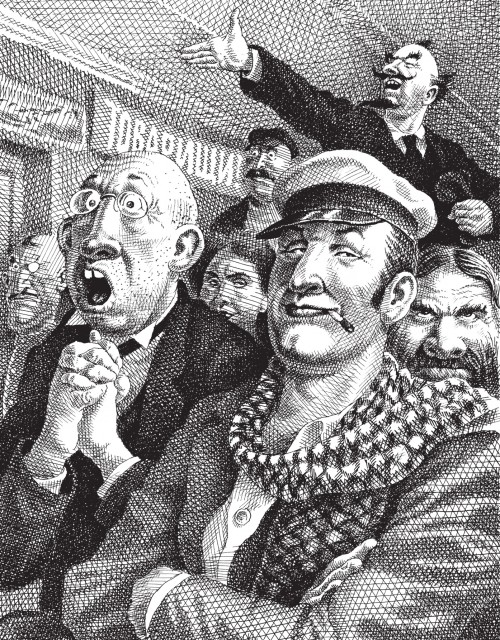
Ilf and Petrov "The Twelve Chairs" (Artist: Lemekhov)

Ilf and Petrov “The Twelve Chairs” (Artist: Lemekhov)

Who are your all-time favorite writers?

This is an impossible question! I can’t really choose, so I offer a list of ten wonderful texts (below), in English translations that give a sense of the work in the original. For me Russian literature encompasses all the writers and poets, and singling out one or another seems wrong to me. I do love them all, though I may sometimes reach for Gogol, while Turgenev appeals to me more on a different occasion. I would choose Tolstoy’s War and Peace as a quintessential encyclopedia of Russianness, and it could be a good introduction to Russian literature if you have some guidance. In Russian schools, students read War and Peace at age 14 or 15 (it could be a little later nowadays), and when you’ve read War and Peace, you consider yourself an adult. You live with Natasha Rostova, Pierre Bezukhov, Marya Bolkonskaya, and Andrei Bolkonsky for a long time, and they stop being just characters in a book. They become your friends, and you learn how to live with them. None of them is “positive,” and they make lots of mistakes. Still, you care for them and grow up with them and through their struggles and quests.

Tolstoy "War and Peace" (Natasha's Ball) (Artist: L. Pasternak)

Tolstoy “War and Peace” (Natasha’s Ball) (Artist: L. Pasternak)

Julia’s recommendations (Texts and translations, in no particular order)

1. Ivan Turgenev’s First Love (Constance Garnett translation), a novel that is on the borderline between prose and poetry. It is a study of a tormenting passion and a devastating loss of innocence.

2 and 3. Nikolai Leskov’s Lady Macbeth of Mtsensk (Robert Chandler translation), which is as intense as Shakespeare, and Nikolai Leskov’s The Enchanted Wanderer (Ian Dreiblatt’s new translation is a must), a picaresque folk adventure novel.
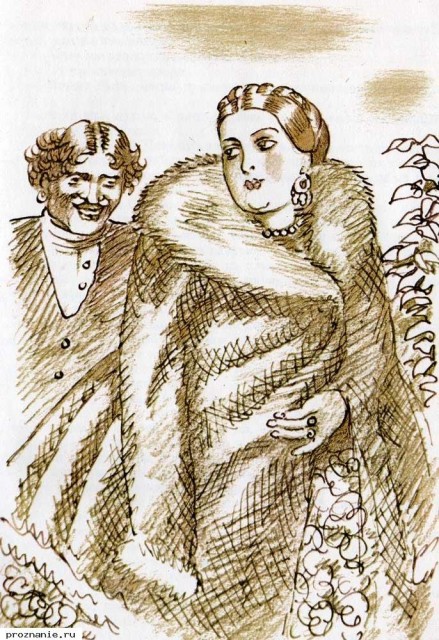
Leskov "Lady Macbeth of Mtsensk" (Artist: Kuzmin)

Leskov “Lady Macbeth of Mtsensk” (Artist: Kuzmin)

3. Nikolai Gogol’s The Government Inspector (Ronald Wilks translation), a biting and hilarious play.

4. Mikhail Bulgakov’s Heart of a Dog (Mirra Ginsburg translation), which I consider the most ferocious anti-Soviet satire ever written.

5. Mikhail Lermontov’s A Hero of Our Time (Paul Foote translation is good) is considered the first novel of psychological realism in Russian.

6. Yuri Olesha’s Envy (translated by Marian Schwartz). We are plunged in the extraordinary narrative from the famous first sentence, “In the mornings he sings in the toilet.”

7. Russian Magic Tales from Pushkin to Platonov (translated by Robert Chandler). Half of the tales here are true oral tales, while others are re-workings by four Russian writers, including Pushkin. Russian tales are weird!
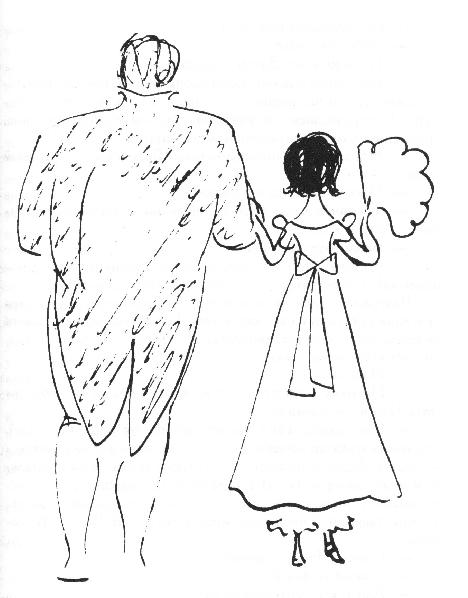
Tolstoy "War and Peace" (Pierre and Natasha) (Artist: Nadya Rusheva)

Tolstoy “War and Peace” (Pierre and Natasha) (Artist: Nadya Rusheva)

8. Ivan Goncharov’s Oblomov (translated by Stephen Pearl) is one the most popular, winsome, and delightful Russian novels. It has become standard reading in Russian schools. If you mention it to a Russian, the response will likely include “Oblomovism” (“oblomovshchina” in Russian), a term from the novel that entered the language to indicate sluggishness, apathy, and inertness. It has also become a catchword for the condition of the Russian gentry, Russian backwardness, and even the Russian soul. Oblomov, the main character, who prefers daydreaming to doing anything, could be judged as an aristocratic parasite or looked at as a holy fool, but his laziness and good-natured idleness have a seductive appeal.
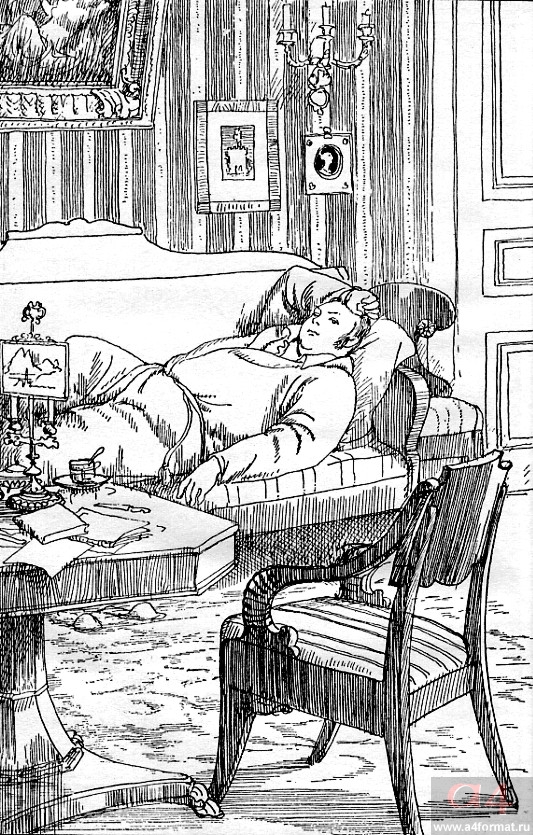
Goncharov "Oblomov" (Artist: Mazurin)

Goncharov “Oblomov” (Artist: Mazurin)

9. and 10. The Twelve Chairs by Ilya Ilf and Evgeny Petrov, and its sequel, The Little Golden Calf, have enjoyed an immense popularity in Russia. Ostap Bender, the “grand strategist, or operator” is a con man on the make in the Soviet Union during the New Economic Policy (NEP) period. He is obsessed with getting one last big score—a few hundred thousand will do—and heading for Rio de Janeiro, where there are “a million and a half people, all of them wearing white pants, without exception.” Both Bender novels have been called “encyclopedias of Soviet life” and are indeed perfect catalogues of their time.

My thanks to Julia Denne for our conversation! Note: For more information on classes, click here.

Selections of Russian Literature (Photo by Nina Denne)

Selections of Russian Literature (Photo by Nina Denne)

Signature2Thank you for reading this! If you think of someone else who might enjoy it, please forward it to them. And, if you are not already a subscriber, I invite you to subscribe to the Wednesday posts I am sending out each week–it’s easy, free, and I won’t share your address!

On the Joy of Making Things at Christmas Time

Peanut, Wearing a Handmade Hat (Thanks, Carolyn!)

Peanut, Wearing a Handmade Hat (Thanks, Carolyn!)

One of the things I love about Christmas is making things. Don’t we all? Even more than during the rest of the year, there is a special joy in making holiday gifts for other people. Every year, I make some (but not all) of my gifts. Julia and her friends make the lion’s share of their gifts to each other.

At our house, making takes many forms.  The classic one is a child-made Christmas tree ornament, and these are my all-time favorites, including the angel made from a clothespin and a coffee filter and the candy cane made from beads and a pipe cleaner shown below.

IMG_7940

IMG_7939

Rudolph the Gumdrop-Nosed Moose Dude

Rudolph the Gumdrop-Nosed Moose Dude

This category also includes those who are technically grown-ups but still young at heart!

Tree Made By Jan

Tree Made By Jan

Friendly Faces Crafted by Uncle Bill

Friendly Faces Crafted by Uncle Bill

Photograph By Karla

Photograph By Karla

Vintage 1960s--Made By My Grandma Marie

Vintage 1960s–Made By My Grandma Marie

One of a Set of Four by Pat

One of a Set of Four by Pat

Tim, Julia, and I like to make our Christmas cards when things aren’t too busy. (The linoleum block below shows a stamp we made to create cards a few years ago. I am quite sure we’ll use it again one day.) Other kinds of making at our house range from sewing, quilting, and knitting; to making cards, personal one-of-a-kind books, and framing photographs and drawings; to crafting edible delights. In our circle of friends and family are also are those who make dolls, turn wood, and shape things from stained glass and ceramic tile.

IMG_7937

Things made especially for us (or made and passed down by a family member or friend) have a special charm all their own. They seem to have special longevity, too. Here is a view of a tablecloth created with cross-stitch, augmented with gold-colored metal thread, and mounted rhinestones. It was made by my mother’s Aunt Helene. I never met her, but my mother always used this tablecloth at Christmas, and now I do, too.

Aunt Helene's Handiwork

Aunt Helene’s Handiwork

More than the objects, though, the memories of making, giving, and receiving homemade gifts are the ones that have the most staying power. Here’s a series of three ways our trusty treadle sewing machine (a Franklin, from the 1930s ,always parked in the dining room), contributes to our Christmas pleasure.

Treadle as Credenza

Treadle as Credenza

Treadle as Work Table

Treadle as Work Table

Treadle at Work: Making Pillow Cases as Gifts

Treadle at Work: Making Pillow Cases as Gifts

I collect stories of handmade gifts, so, if you are so inclined, please let me know of a gift you made yourself, or a gift your cherish because of the giver’s handiwork.

IMG_7941

Signature2Thank you for reading this! If you think of someone else who might enjoy it, please forward it to them. And, if you are not already a subscriber, I invite you to subscribe to the Wednesday posts I am sending out each week–it’s easy, free, and I won’t share your address!

Gratitude and Abundance & “On the Other Side of October” (Poem)

As we give thanks for all the abundance in our lives, I offer a few images from mine, in deepest gratitude for all we have, all we are, all we share.

HAPPY THANKSGIVING DAY

Arb 2003

On the Other Side of October

waits November’s dripping eaves,
low grey skies, winds, tumbling leaves.

After expanses of slate-colored days,
we gather tableside to offer praise.

Incise the crust of apple pie;
then fragrant incense lifts the sky.

Let’s raise our glasses and our hearts,
knowing that we have done our parts

to bring our glowing harvests in.
It’s time to celebrate! Begin!

Leslie Schultz

SecurityFood Leslie Schultz

100_9525

100_9530

100_9536

100_9540

Harvest Table 2003

Signature2Thank you for reading this! If you think of someone else who might enjoy it, please forward it to them. And, if you are not already a subscriber, I invite you to subscribe to the Wednesday posts I am sending out each week–it’s easy, free, and I won’t share your address!

Celebrating the Diversity of Independent Book Stores: Suggestions from Readers

Black Friday, bristling with door-buster deals at dawn, is, for me, a day to stay happily home.  My favorite thing to do–after the joys of Thanksgiving cooking and company the day before–is to curl up with a good book, preferably one recommended by a friend, one summarized by an insightful reviewer, or one I browsed from the (actual or virtual) shelf of an independent book store.

A Favorite Reading Chair

A Favorite Reading Chair

Like most readers, I love libraries (see my very first blog post from November 2011!), and I am also a fan of big book sellers like Barnes & Noble and Amazon. Independent book sellers hold a special place in my heart, however, and I like to support them whenever I can.  I think of each book store as I do collections of visual art: each is curated with a particular sensibility, from small shops (like tiny art galleries) to large-volume stores, more akin to full-scale museums.

I am convinced that independent book sellers are playing a key role in assuring the vitality of literary culture. Like family farms, independent book stores have been stressed in recent decades, but they remain as highly important diversity outposts and cultural icons. My hope is that they are an indelible part of the landscape. On Black Friday, and every day, I want to do my part to make sure they remain in the black.

As with the food I consume, I am more and more alert to where my books come from and how they arrive in my hand. And it seems many of you agree. A few months back, I put out a request to readers, asking for suggestions about the places you have found special books, congenial spaces, and exceptional customer service. Your wealth of suggestions (THANK YOU!) follows a brief profile of my own favorite local haunt. And for anyone who has known a love affair with books, you’ll want to scroll all the way down to find a special essay by Beth Clary called “Des Kenny: The Other Man” (that includes some beautiful photographs of Galway, Ireland.)

Monkey See, Monkey Read (Northfield, MN) Monkey See, Monkey Read Exterior

Interior of Monkey See, Monkey Read

Interior of Monkey See, Monkey Read

In the past seven and a half years, Monkey See, Monkey Read has become a Northfield, Minnesota landmark. Locally it has a reputation of diverse new and used stock, professional service, and unstinting support of local authors. (If you like mysteries, take a closer look at local author  and French professor Scott Carpenter’s new book, visible on the shelf, called Theory of Remainders, as it is a gem of a literary page-turner.) This special store is also a fun place to browse for games, cards, t-shirts, and mugs and to have a chance at lively conversation. As an author, I appreciate having a real book store where I can direct people interested in purchasing copies of my books, and I rather love the company my own titles keep just one shelf above!

My own books -- near those of J.K. Rowling -- at Monkey See, Monkey Read

My own books — near those of J.K. Rowling — at Monkey See, Monkey Read

Since The Howling Vowels was published two years ago, sales from Amazon and Monkey See, Monkey Read are neck and neck…hmmm, either Northfield reads as much as the whole rest of the world, or else proprietor Jerry Bilek is a heck of a bookseller. Or, perhaps, both things are true. Bilek began his book-selling career with seven and a half years at Borders Books chain in the Twin Cities metro area, followed by seven and a half years at the St. Olaf College Book Store, giving him an impressively balanced tripartite view of the business.

Veteran Bookseller Jerry Bilik at Monkey See, Monkey Read

Veteran Bookseller Jerry Bilik at Monkey See, Monkey Read

“When I decided to open my own store,” Bilek recalls, “I had two goals. I wanted to create a store that I would want to shop in myself, and I wanted to treat customers the way I like to be treated.” He adds, “I don’t need to make tons of money, but making a profit is essential. Without that, I would have to close the store, and that would not be serving my customers.”

Bilek notes that in 2009 Northfield had two of its three independent book stores close their doors but that by 2010 his business was experiencing new growth and solidity. “I have the impression that people here really value having a book store right on Division Street and that they have made the decision to support me, which is great, because I want to be here for a long time to come.”

If you are not as fortunate as I am, with Monkey See, Monkey Read just a short walk from your home, you can take a look at their website: www.monkeyread.com, check out their blog, or call for that hard-to-find title at (507) 645-6700.

Uncle Hugo’s Science Fiction Bookstore (Minneapolis, MN)
submitted by Caroline Stevermer

Photo by David Dyer-Bennet

Photo by David Dyer-Bennet

Uncle Hugo’s, now the oldest SF bookstore in the country, is in the perfect location in South Minneapolis. Not only is it conjoined with Uncle Edgar’s, a wonderful bookstore specializing in mystery fiction, it is just across the street from Midtown Exchange, where all manner of food stalls, coffee shops, and restaurants are available for refreshment (and parking is free for two hours if you get the ticket from the adjacent parking lot stamped when making a purchase at any of the businesses in Midtown Exchange). An hour spent browsing at Uncle Hugo’s is an hour spent with the best of fantasy and science fiction — not just the classics, but the best of the new as well. If you have questions, the staff are superb. Elizabeth LaVelle in particular is a genius at matching reader to book. As they have a website and do mail orders, you can get Elizabeth’s advice from vast distances as well. I appreciate the way Uncle Hugo’s supports local writers, and I confess I am one of them (2864 Chicago Ave S, Minneapolis, MN 55407 http://www.unclehugo.com ). Note from Leslie: I also highly recommend looking for Caroline’s books; a good starting place is here.

University of Chicago Seminary Co-op Book Store (Chicago, IL)
submitted by Robert Denne u of chi sem book store The Seminary Co-op bookstore has piqued my curiosity and helped to satisfy it for all of my adult life.  Its collection of amazing books that I never knew I wanted to read until I’d ventured inside to discover them has been drawing me back every time I’m in the neighborhood.  Trade and mass-market channels, even supplemented by regular perusals of book reviews, failed to alert me to wondrous new titles as effectively as the Co-op has always done.  And books of enduring merit, if not widespread appeal, are also always to be found there.  Although I mostly haunted the mathematical, statistical, and economic sections of the store, I was also routinely delighted by serendipitous discoveries further afield, such as books on the historical and philosophical aspects of Chinese landscape painting – none of which you would naturally associate with a seminary bookstore.

Nurturing the brain, for both business and pleasure, with the possibility of immediate interaction on a more human scale than with a huge research library or a remote retailer, is the essential role this place has always played for me. On the occasion of a campus expansion, the bookstore was moved from its rabbit-warren quarters in the basement of one building to a sunnier, more accessible nearby location, while preserving the more intimate aspects of the old one.  A project to document the store’s transition and its meaning for others makes for interesting reading at http://www.semcoop-project.org/  The link for the store itself is http://www.semcoop.com/  A Wikipedia article with a few interesting facts and figures is available at http://en.wikipedia.org/wiki/Seminary_Co-op.  

 A Room of One’s Own (Madison, WI) and Novel Ideas (Bailey’s Harbor, WI) submitted by Ann Lacy Bookstore 3 Trim(Large) A Room of One’s Own is my “go-to” bookstore.  I have followed Room through many incarnations in downtown Madison, and am happy to report that their new location is the best yet!  Room has always had an excellent selection of books and friendly and knowledgeable staff, and now with a significantly larger store, and the addition of used books through their partnership with Avol’s, Room has an even better selection, and more space for readings.  I find what I come looking for when I shop at Room, but like all good bookstores, and especially independent bookstores, the greatest pleasure of going there is shelf browsing.

No online list of books, however thoughtfully chosen, can match the sheer bliss of inching along the shelves of a good bookstore, pulling down an interesting title to read the first few lines, discovering an earlier work by an author, being reminded of a book review read last year…  By browsing at Room, I have found so many books I would not have known about otherwise:  years ago, Lynn Lauber’s White Girls, or Cynthia Flood’s My Father Took a Cake to France, more recently, The Icarus Girl by Helen Oyeyemi.  And if I do feel the need to order a book online, I can do that, too, and have the books sent to Room for pickup, thereby avoiding shipping charges.  For more on Room, please check out their website: http://www.roomofonesown.com/.Book Store Past Times (Large) I don’t spend anywhere near as much time in Door County as in Madison, but I would also like to put in a plug for Novel Ideas, a relatively new bookstore in Baileys Harbor, Wisconsin.  Although it is much smaller than A Room of One’s Own, it also offers good shelf browsing opportunities–and is where I came across Everyman’s Rules for Scientific Living by Carrie Tiffany and Gillian Flynn’s Dark Places (long before Gone Girl…)  So if you are in Door County (the thumb on Wisconsin’s mitten), check out Novel Ideas (http://www.novelideas-books.com/), and then go down the street to Nelson’s Shopping Center (a True Value hardware store that is just stuffed with merchandise), loop over to Cana Island Lighthouse (http://www.dcmm.org/cana-island-lighthouse/), and on your way to Cave Point County Park (http://map.co.door.wi.us/parks/), stop in Jacksonport and pick up picnic supplies at Bley’s Grocery (a small and friendly place with a fine butcher counter.)  

RiverRun Books (Portsmouth, NH) and Northshire Books (Saratoga Springs, NY) submitted by Beth Clary

On travels out east this year, I visited two great independent book stores. One was in Portsmouth, NH. It’s called RiverRun Books (http://www.riverrunbookstore.com). It’s small,l and on the shelves there is a mix of used and new books. Under tables throughout the store are used books that people bring for money or for credit. I was impressed the woman I spoke with at length and by the store’s own story. Definitely one for a conversation. Bill said, “That story would make a great movie.” They are publishing Baron Wormser’s novel (due in December), and so I asked them a lot about their publishing arm. Interesting…hints a little of self-publishing but with the external eye on it as well which I think is important. A quiet and small place.

The second store that wowed me was relatively new to Saratoga Springs. It is called Northshire Bookstore. (http://www.northshire.com) They are legendary in New England for their store in Manchester, VT. It is very exciting to think that they now have a store in Saratoga Springs (makes me want to live there even more), and it is a magical place.  They carry A LOT of titles and have A LOT of space. Plus it was packed with people of all ages and races and languages in part, I’m sure, due to Parents Weekend at Skidmore. A true liveliness. Note from Leslie: Scroll down to find a lively essay by Beth about her unusual trans-Atlantic tri-annual relationship with Irish bookseller Des Kenny!

The Well Red Coyote (Sedona, AZ)
A Great Good Place for Books (Oakland, CA)
Copperfield’s Books (Multiple locations, Northern CA)
Changing Hands Book Store (Tempe, AZ)
Book Passage (Corte Madera and San Francisco, CA)
The Book Shop (Green Valley, AZ)
submitted by Denise Roessle

Author Denisse Roessle (right) at Well Red Coyote

Author Denisse Roessle (right) at Well Red Coyote

The Well Red Coyote is Sedona, Arizona’s only full-service, general-interest bookstore, carrying everything from the latest fiction, to Sedona guidebooks, to personal growth books, to books about nature. They have a great selection of books for kids of all ages and do mail orders and special orders, with hard-to-find titles their specialty. Best of all, they offer free author presentations, writing workshops, healing seminars, metaphysical & personal growth talks, talks about Sedona hiking and much more, every week. (website: http://www.wellredcoyote.com/) It’s a lovely store and the owners, Kris and Joe Neri, are delightful. I’ve given presentations about writing memoir there twice this year. Above is a picture of Kris Neri and me in the store after my event on November 9. GGPFB

A Great Good Place for Books, Oakland, California (website: http://greatgoodplace.indiebound.com/welcome-great-good-place-books) is a cozy, friendly, eclectic bookstore in a quaint/artsy neighborhood. I did a reading of Second-Chance Mother in June 2012.

Changing Hands'

Changing Hands Bookstore, Tempe, Arizona Website: http://changinghands.com/ Popular bookstore in a college town, and one of the few independents / non-specialty bookstores in the entire Phoenix area. Huge variety, charming ambiance, friendly staff. Also they have author events, workshops, book clubs, etc. every week. Here I am again… signing my books there earlier last June. P.S. They attract some HUGE authors!

Napa

Copperfield’s Books, with multiple locations in Northern California (website: http://copperfieldsbooks.com/) is larger than most independents, but still friendly and helpful. I did a reading there last year as well.

Book Passage, has locations in Corte Madera and San Francisco. They call themselves “The Bay Area’s Liveliest Bookstore”Website: http://bookpassage.com/ — and it certainly is true. They host tons of events, with well-known authors, plus workshops and conferences. Note from Leslie: explore author Denise Roessle’s work at her website www.secondchancemother.com

Book Shop GV

The Book Shop in Green Valley, AZ is a wonderful full-service community bookstore, with new books, a paperback exchange, and book rentals. They don’t have a website, but do take and ship phone and email orders. They are located in the Green Valley Village, 231-B Esperanza Blvd, Green Valley, AZ (south of Tucson). 520-625-1995, email: g-gvbookshop@qwestoffice.net

Note from Leslie: explore author Denise Roessle’s work at her website www.secondchancemother.com

The Last Bookstore (Los Angeles, CA) submitted by Raina Richter

My favorite independent bookstore is the Last Bookstore.  They are the best.  The place is huge and has a labyrinth on the second floor where all of the books are $1, which includes a sci-fi vault and random book art.  Here is more about them: http://lastbookstorela.com/about/. Here also is a photo of me and my dogs wandering the labyrinth. There are a ton more photos online.

The Last Bookstore (Los Angeles, CA)

The Last Bookstore (Los Angeles, CA)

Just from this small sampling, I am bedazzled by these book oases, by how different each is and how committed to helping readers foster their joy in books. I am also fascinated by the different relationships that readers, authors, and booksellers develop.

And so, if Black Friday 2013 finds you in a shopping mood, consider the discoveries you might make by visiting your favorite independent book seller.

Not sure of all the options are in your area? Midwest Independent Booksellers Association can help for the nine-state region surrounding Minnesota. For help nationwide, check out the resources of the American Booksellers Association. You just might find that unexpectedly perfect gift–for a friend or even for yourself!

Happy Reading! Happy Shopping!

(A big thank you to Julia Denne for suggesting the topic of this post!) Monkey See Tree Above is the tree decorated with sock monkeys, currently in the window of Monkey See, Monkey Read.

Scroll down for a delightful essay on Irish bookseller Des Kenny by Beth Clary.

Signature2Thank you for reading this! If you think of someone else who might enjoy it, please forward it to them. And, if you are not already a subscriber, I invite you to subscribe to the Wednesday posts I am sending out each week–it’s easy, free, and I won’t share your address!

Swans at Galway Bay

Swans at Galway Bay

Des Kenny, The Other Man

I’ve been happily married for thirty-one years, but I admit it: I have had a fourteen-year relationship with a man other than my husband. He’s older than I am; shorter than I am and definitely more well read than I am. Add to that he has a beautiful Irish accent of the Galwegian variety. We’ve actually only been together four times. What times they were. But he sends me boxes two, sometimes three times each year and has done so faithfully since that first November of 1999.

The first time we spoke it was early on the morning of November 19th, the morning of my fortieth birthday. He was the first person to wish me happy birthday that day, to tell me that my sisters had arranged for a special gift for me, a selection of Irish books. Awakening to the roll and cadence of an Irish brogue is a delightful way to start one’s day. Not only did he start with birthday greetings, he apologized soon after. The gift would be late, he was sorry to tell me. That was why he called. He wanted to be sure I knew who was thinking of me. Also, he was looking forward to meeting in person the next March when I would be in Ireland.

A few months later, I went to his place, a beautiful old building with a window James Joyce mentioned in Ulysses and floors filled with comfortable over-stuffed chairs, walls with photographs of writers and over thirty thousand books. Think how the hours would pass with this man in this place. I heard his voice, just the same as the one that wished me happy birthday, as I was browsing through Ireland’s newest releases. I looked and saw him for the first time. Dark hair, red flushed face, ironed buttoned down shirt moving comfortably over his round belly to tuck into practical black pants that ended in sturdy black shoes. He was engaged in a difficult conversation. I could tell from the way he spoke and the specks of sweat that appeared on his forehead. He was handing papers back to a woman dressed in a cape. He told her he didn’t take to her story. She pressed him but he gently took her hand and pressed the papers into it and said, “Keep at it. Don’t give up.”

When she was out the door, and I had climbed the stairs taking in his books and art, I finally introduced myself to him. Oh the conversation we had. We discussed what I’d seen on my visit so far, which things in the box he’d sent I enjoyed the most, what the prairies are like where I live – a place he’d never been. Someone brought us hot tea on that cold wet March afternoon. Before too long I was writing down my email address and making a list for him: Yeats, Gregory, folklore, spirituality and death.

He looked at the list and smiled, “Yes. I can definitely do this for you. How often shall I be in touch?”

I blushed. “Twice, maybe three times each year?”

He nodded and said, “Excellent. And what about today? Won’t you take something with you today? I think I have a thing or two for you over here.”

I followed him. He set aside more than a thing or two to send to me and I took a couple with me. That night, curled up in bed, I pulled out the bookmark that he’d slid between the pages of the book I’d purchased. On one side was a quote from the Irish poet Theo Dorgan. “I heard last night that Borges up in Heaven was asked by God to recommend a read. ‘Why don’t you e-mail Kenny’s,’ was his answer, ‘and while you’re at it, say hello from me.’ (To the tune of Galway Bay.)”

This man with the lovely lilt of the Irish in his voice, is Des Kenny, bookseller. He sends me books at least twice each year. If he comes across a book that makes him think of me, houses of Co. Connemara, the county of my relatives, or a new book by Irish author Dermot Bolger whom I’d read and admired a great deal, he’d put that book in the box as well. Sometimes I get an email from him asking for my new credit card number and wondering what book I liked best from the last batch. We correspond a time or two and then hold off, waiting for the next time something throws us into contact.

Irish Pennywhistler

Irish Pennywhistler

One time I was working on a story about death. The main character has a particular way with the dying and I couldn’t find a word in the English language for it. After trying to create a new word from our language even dreaming of floating letters that came together in a jumble of nonsense and then dissipated, I decided to call Des and see if the Irish had a word for such a person. Des, who speaks Irish as well as English, listened to the description of my character. We discussed banshees, the Irish expression for the grim reaper and other Gaelic words that might work. He promised to talk to some folklore experts he knows and get back to me.

A week or ten days later he called me back to talk to me about psychopomps, escorts for the dying. That was getting closer, we agreed, but we would keep searching, reading and talking.

Not long after, I had the chance to spend ten days in Galway as part of the Fairfield University MFA program. I told the director about Des and how he knew more about Irish literature than anyone on earth. So one night Des gave a talk on the history of Irish literature to our group. Before the talk, we greeted each other and had a few precious private moments of conversation about my writing, his reading and the release of his latest book: Kenny’s Choice: 101 Irish Books You Must Read. I asked when I could see him at the new store, the one they’d move to from High Street, the Galway centre store they occupied for decades. “I’m there every day but Sunday,” he said.

I went and visited this airy light open space that struck me as the opposite of the old store on High Street. Des gave me a tour. All the two thousand plus photographs of authors could be easily seen. Books were displayed more like a library than the creaking floors and leaning shelves at the old bookstore and comfortable couches and chairs were scattered around the open room. The art gallery was gorgeous. It felt as if the paintings and sculptures and glasswork had room to breathe. Then, discreetly, he showed me where over three hundred thousand books are ready to be moved onto shelves or into boxes for shipping.

I am not Des’s only admirer. When Kenny’s announced they were closing the High Street store in 2006, the regular visitors spoke out appealing to the Kenny Family to keep a bookstore somewhere in Galway. They asked how they could live without a place to browse books, or to visit with the people they only bumped into at Kenny’s. Finally, Des and the seven other members of the Kenny family who work at the store, relented and opened this new place, a little out from city centre, in 2008. It isn’t as busy as I remember the old store being, but there are plenty of people browsing and talking about books. Des also has about 1500 other admirers in seventy-five different countries. One way or another they too became members of Des’s book club, receiving a regular dose of reading, hand-picked by Des.

Des Kenny

Des Kenny

I don’t mind sharing Des. As long as that box of books shows up twice each year and I can call him when I need to understand something only he could explain, I’m content. I probably have more books from Ireland on my shelves and tables and desks than I’ll read in this lifetime. But having them there reminds me I always have something to read – whether for work or pleasure, to escape times of sickness or loneliness or to savor a story the way only reading allows. Of course, it helps that these books remind me of Des. I can picture him, pulling my 3 x 5 card from his files and contemplating what books I might want to read next. It’s mid-November, my birthday just days away. Another box should be arriving any day now.

Beth Clary OLYMPUS DIGITAL CAMERA