Postcard: Easter 2019
Umbrellas

 Upturned blossoms
 open on rainy days,
 the weather necessary
 for thirsty upright flowers.

 Windborne colonies,
they travel along sidewalks,
 especially now, when April
 showers are bringing trills

 of robins. Clouds will part;
 the dome of egg-blue
 will return. Until then,
 bumper crops of bright

 bumpershoots fill
 our lowered skies,
 protect our heads,
 delight our eyes.

 Leslie Schultz

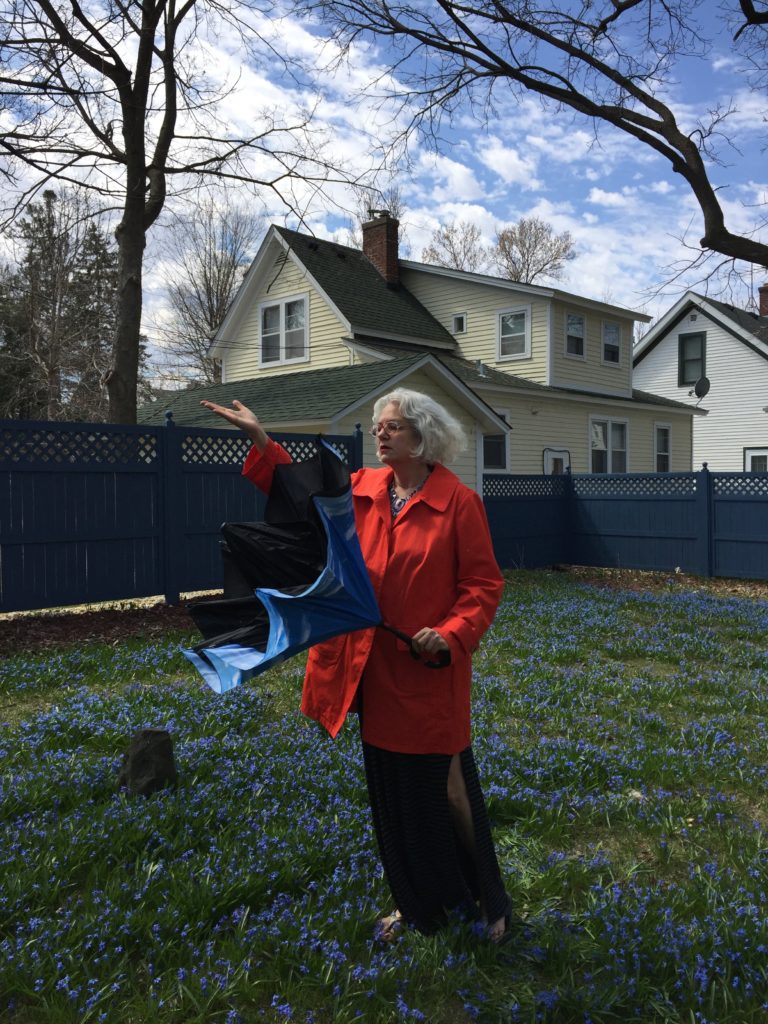


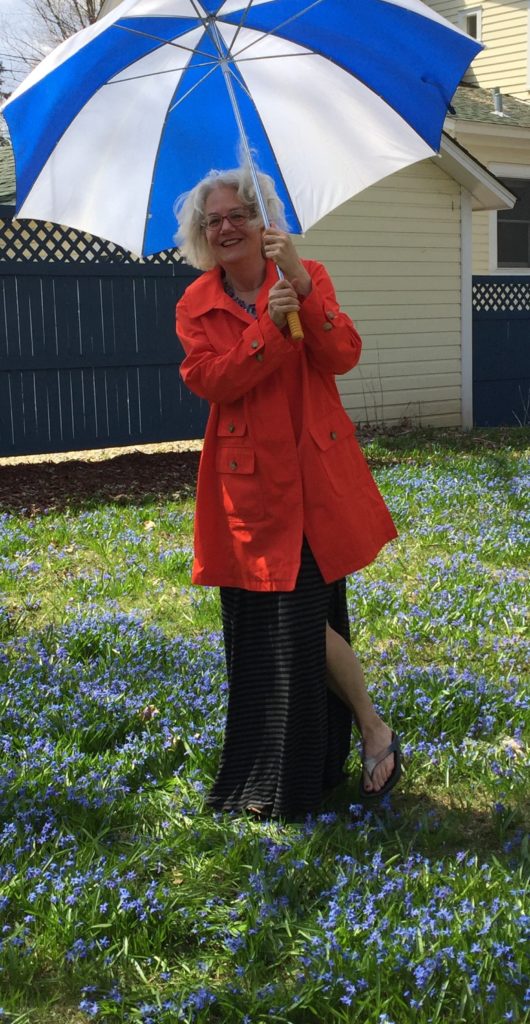
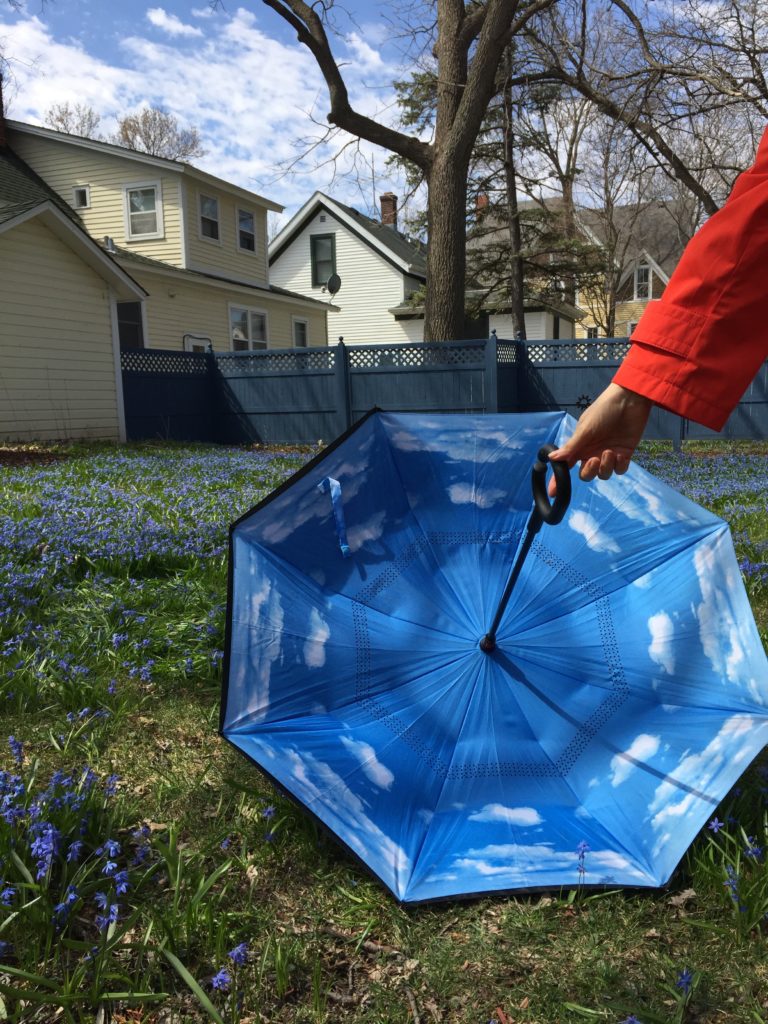
Yep. Today, it is raining again, here in Northfield, Minnesota, but today I am looking on the bright side! Many thanks to model Mattie Lufkin–Mattie, you bring sunshine wherever you go!
LESLIE


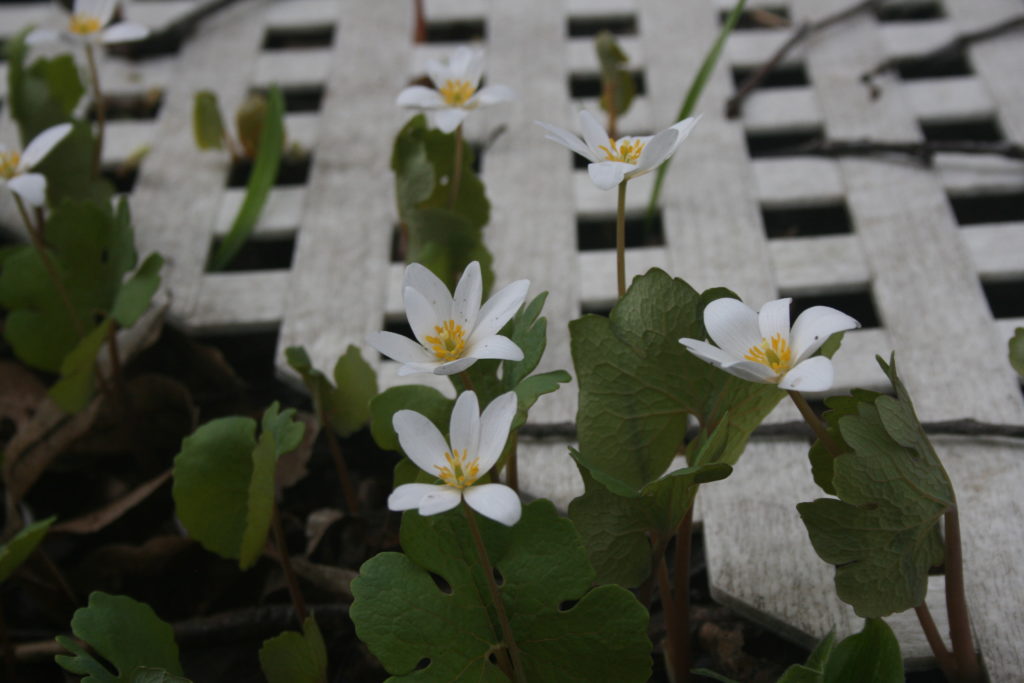
 Trillium

 We have a singular one
 in our back garden
 at the foot of the elm.

 Each spring it rises
 in a trio of tiers:
 leaves, sepals, petals.

 It offers a time-lapse
 waltz of color change:
 white satin, berry pink, ash.

 Leslie Schultz
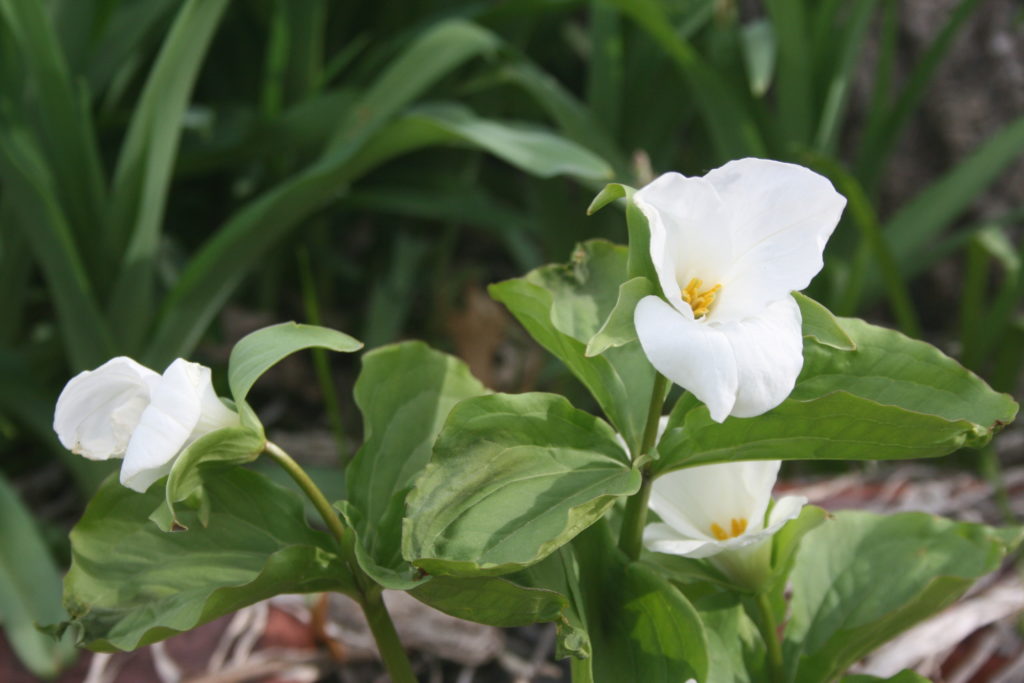
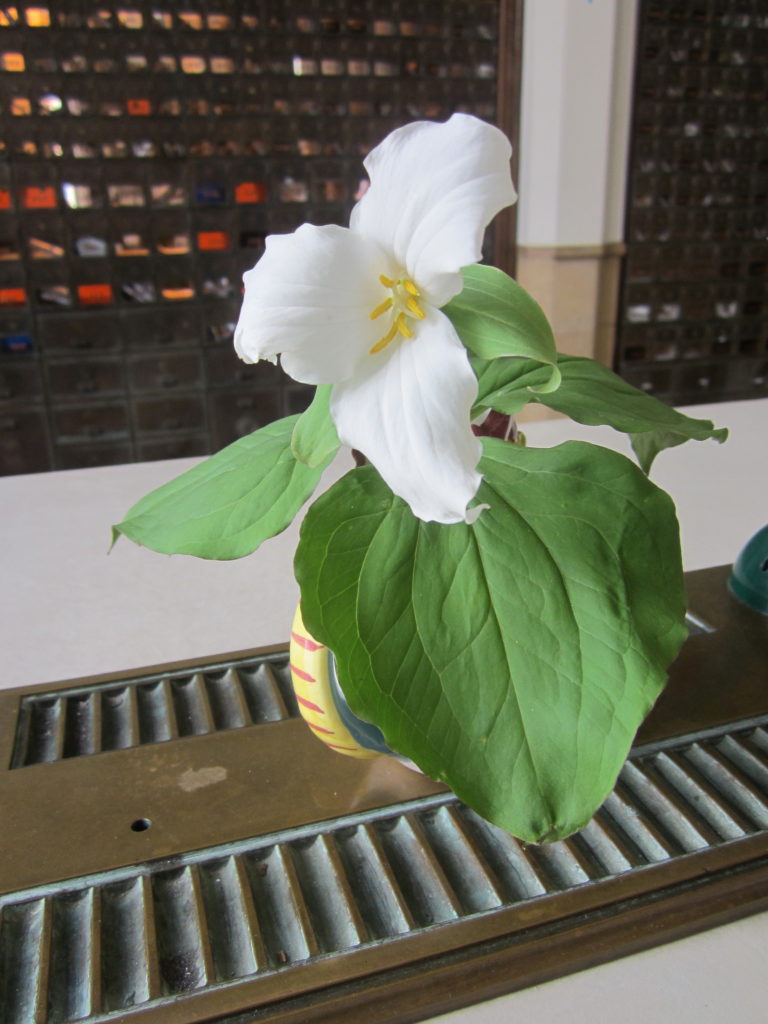
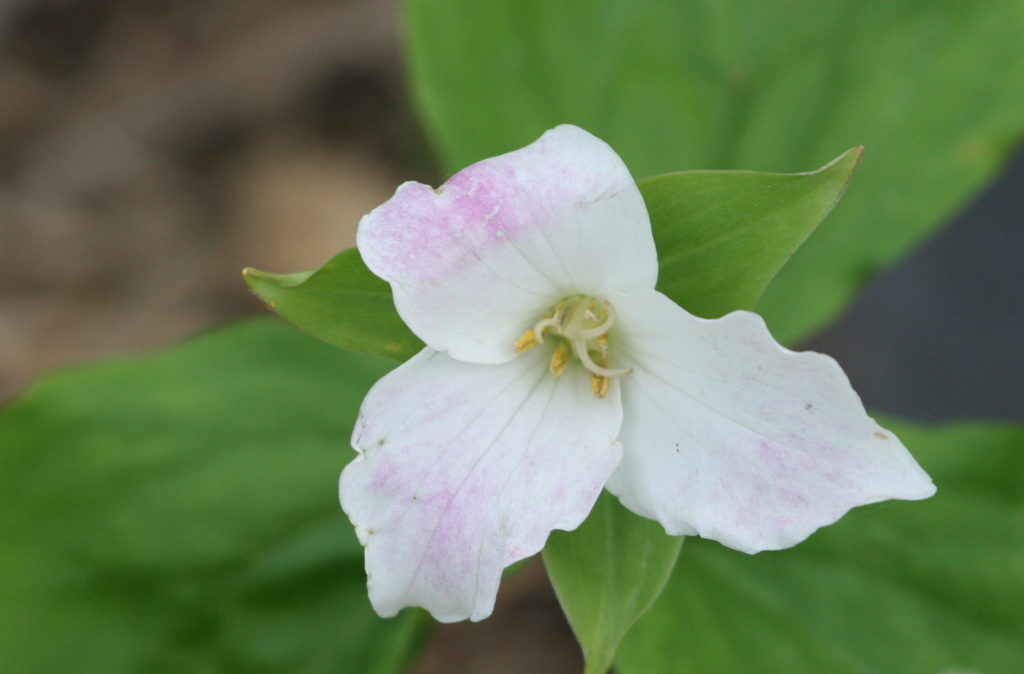
I first learned about these woodland flowers when I was a child in Oregon. When we moved to Northfield, we planted one at the base of our American Elm. Both are still healthy! Our trillium should be blooming in a few weeks, and this year I intend to take some photographs of it when it is fully pink. (The first and second images are from our garden. The middle image was taken at the Northfield Post Office.) Until I was able to observe this single plant, I did not know how the starlight-white of the new trillium bloom turns pink as it ages. Botanically, I read that this results from self-generated anthocyanins–triggered by stress or aging–with the goal of reclaiming and conserving the nutrients in the petals that the trillium is throwing away. I don’t fully understand that mechanism, but I find myself wondering about the way humans seem to move oppositely along the color spectrum–from rosy baby to white-haired elder.
As evidence, I submit the following from a dozen years ago! Below is an image taken at Village on the Cannon. Julia and I are waiting for our Spanish lesson with Susan Hvistendahl and celebrating that a trio of my photographs are on the wall. Today, I note that my face then was rosier, my hair less threaded with white just a decade ago.
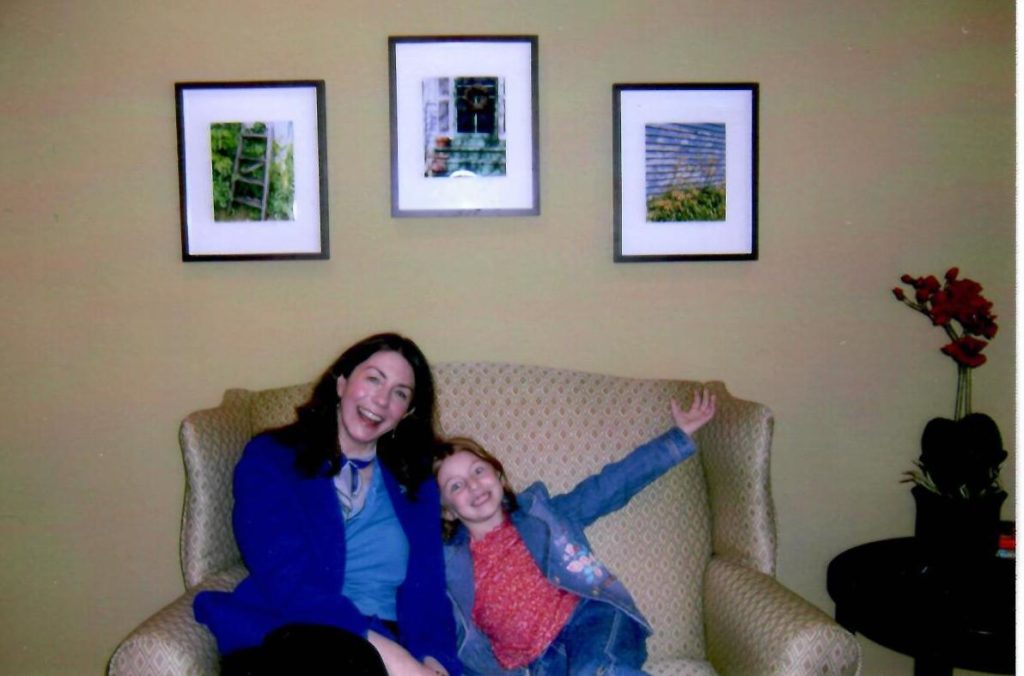
Happy Saturday! LESLIE
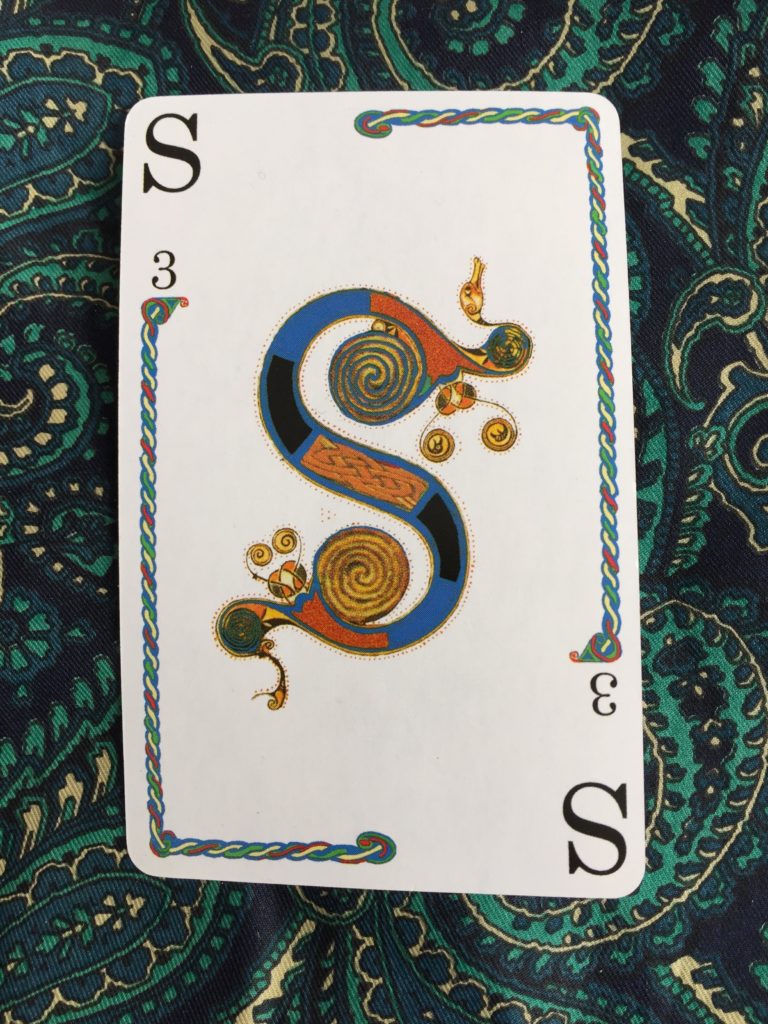
Sylvan
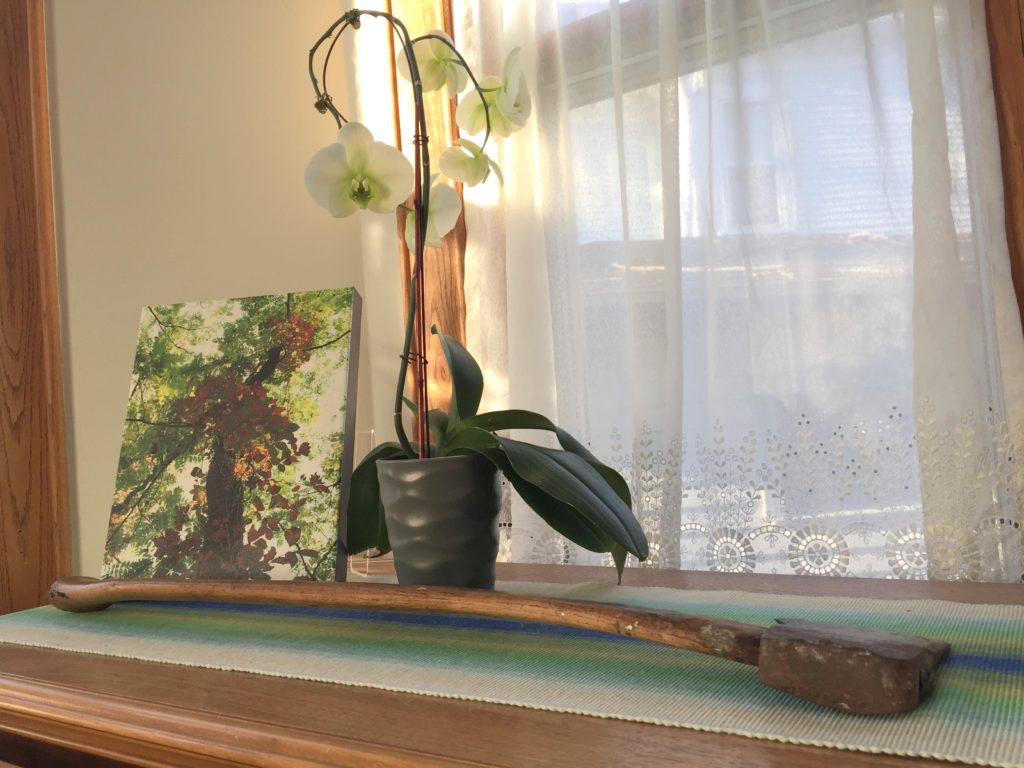
      for James Peter Danielsen

 I have it now,
 my great-grandfather’s axe.
 Once upon a time,
 he was a woodcutter
 in the Old Country.

 Still a young man, he came
 to Oneida County
 to swing his axe
 as a lumberjack
 in the Northwoods.

 When I knew him,
 in the Paper Valley
 of the Fox River,
 he was retired from the mills.
 He had silver hair,

 well-cut suits,
 a gentle smile,
 His Danish vowels flowed
 musically like a spring
 brook over smooth stones.

 We called him Grandpa Jim.
 He married Mae late,
 she with blue eyes as cold
 as the Danish sea, a tongue
 sharp as a switchblade.

 I don’t have his blood,
 or his slender, elegant bones.
 Just this axe, and its echo
 ringing to fell green trees, and
our shared reverence for paper.

 Leslie Schultz



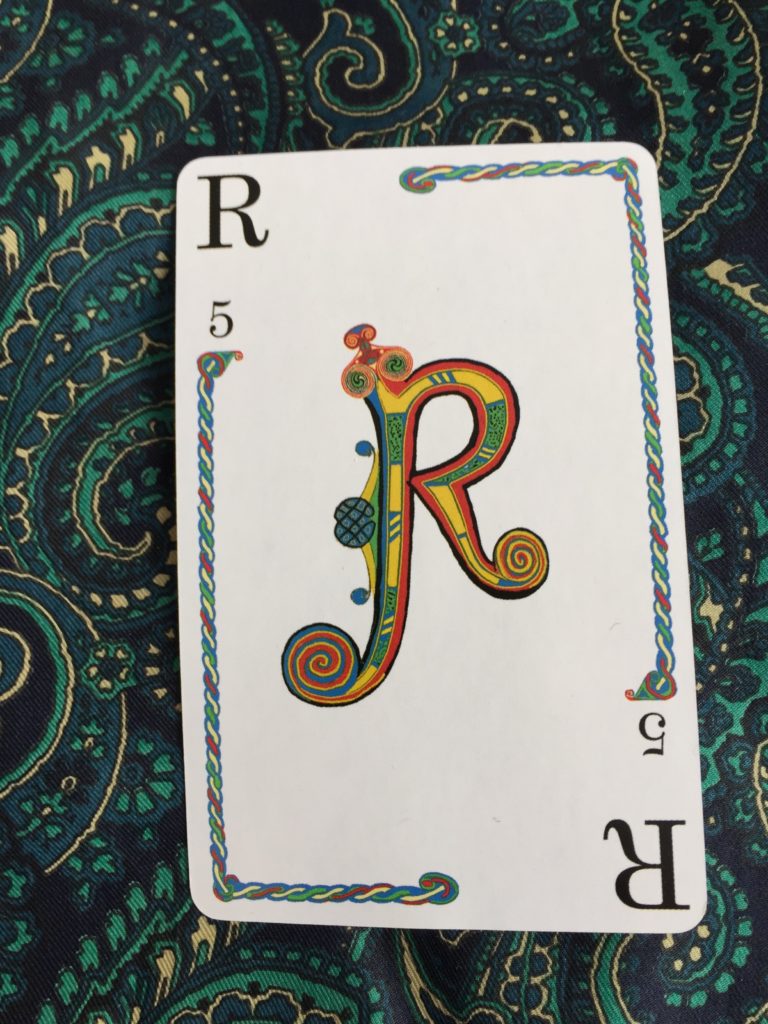
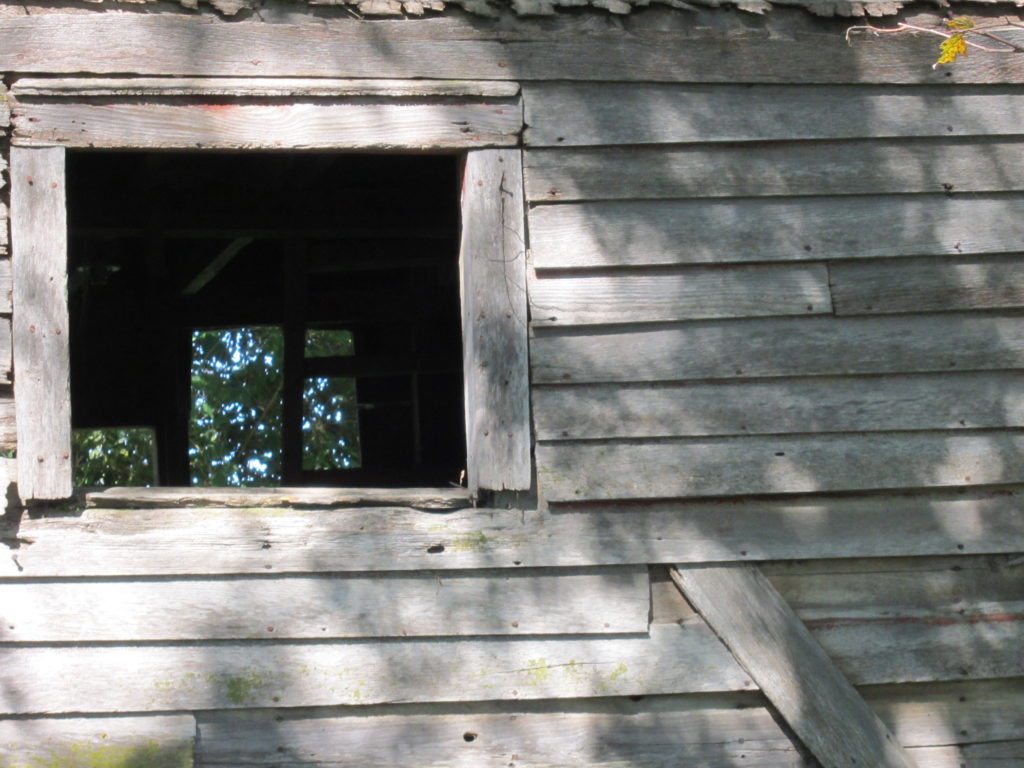
Ramshackle

 The house on the headland,
 once snug,
 is now ransacked by wind,
 pelted by rain,
 invaded by small seeds
 seeking to catch hold
 in a new place.

 Needle grasses burst
 through floorboards.
 White petals cling,
 fresh découpage,
 to fading blue wallpaper.
 Saplings pierce the shingles.
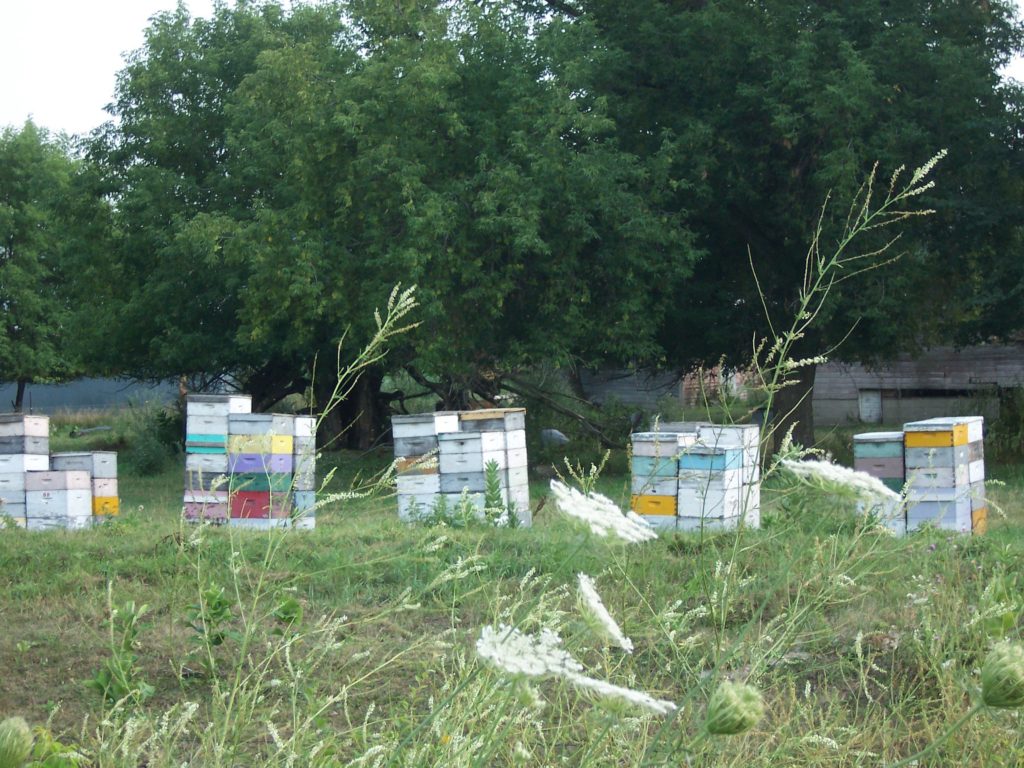
 And all summer, bees patrol.

 Leslie Schultz