Postcard: June 14, 2020

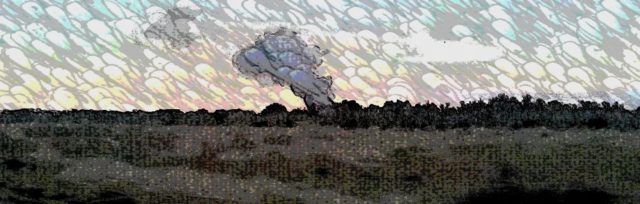
The Summer 2020 issue of Mockingheart Review is now up, and I am pleased to have one of my own poems included in it. MockingHeart Review is an online literary journal. Founded as an poetry magazine in 2015 by Louisiana poet Clare L. Martin, MHR is now under the editorship of poet and critic Tyler Robert Sheldon. Their site highlights this quote from a former U.S. Poet Laureate that resonates with me:
“Poetry provides us with a history of the human heart.” -Billy Collins
I haven’t yet had time to read all this new work in Volume 5, issue 2, but of the poems I have read, I particularly like “The Woman in an Imaginary Painting” by Tom Montag and “The Trouble with Billy Collins’ Poetry” by Andrew Ball.
I am also intrigued by the first mysterious image by the featured visual artist, Lynda Frese.
(Navigating tip from my in-house tech guru: use “Control -” to make the display smaller; this will allow you to access the bottom of the list of poets & poems.)
In this time of anger and anguish, of pandemic and protest, of stress and unrest, I am still trying to make sense of current events. I have not yet been able to examine my feelings or thoughts by making poems. And yet, poetry is even more important to me right now. But why?
I think it is because poetry–and all art–creates a balance I need between emotion, thought, and order (or form, or structure). This spring, in the new days of quarantine and pandemic, making art each morning in April provided a structure and a sense of forward motion in a time when I might otherwise have felt unmoored.
In the past week, although the surface of my own small life has not been visibly affected by the horrific public murder of George Floyd in Minneapolis or the resultant civic convulsions from it, it is certainly affecting me and probably you, too. Some responses are immediate–disbelief giving way to tears, daily following of news coverage, worry for the safety of protesters and bystanders in the cities of my nation, observing the current curfew in my small town. I can tell that this moment of the age in which I live has drilled deep into my psyche. I know that at some unpredictable time in the future I will find myself looking at this collective trauma through the lens of my own, as-yet-unable-to-be-written poem. Today, though, I am turning to the words of others.
“The figure a poem makes. It begins in delight and ends in wisdom… in a clarification of life – not necessarily a great clarification, such as sects and cults are founded on, but in a momentary stay against confusion. ” Robert Frost, “The Figure a Poem Makes” 1939
When I think of the year 1939–the year of Yeats’s death and of Auden’s elegy for him, a time when (in Auden’s phrase) “all the dogs of Europe bark”, when the whole world was convulsing with what would devolve into unprecedented human violence and the dawn of what we now call the nuclear age–I wonder how I would have been affected or responded to it if I had been living then. There is no way of telling.
I tend to gravitate to the small and the personal, to seeing the bright side and to making–a garden, a pair of socks, a pot of soup, a quilt, a photograph, or a poem. And I think that in times of unrest, the world still needs these small life-affirming gestures. What I know for sure is that I do. I need anchors, stays against confusion, however momentary.
On the morning of September 11, 2001, I saw with horror the news coverage of the plane hitting the World Trade Center. It was a Tuesday, a beautiful sunny day in Minnesota. I had a two-year-old who was healthy and laughing and needed breakfast, so I fed her, then read her a story. The doorbell rang. It was my friend, LaNelle, come as she did every week to take Julia for a walk so I could teach my class. After hugging them goodbye, I walked from my house down the hill to the new yoga studio I had opened with my teaching partner, Lynda Grady. I didn’t know if anyone else would show up that morning, but I was glad to have keys to a space dedicated to quiet and peace, at least for myself. It turned out that the class was packed that morning.
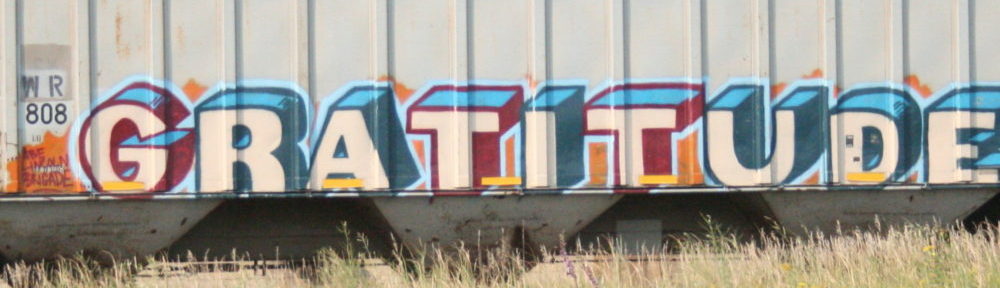
I don’t remember much about the flow of postures but I do recall the flow of our breath, especially as we chanted “OM” together at the end after relaxation in the Corpse Pose, after a few moments of letting everything go, of returning to the present moment and each to our own body. I remember an overwhelming feeling of gratitude for this voluntary community. I felt the truth of the phrase, more resonant than ever this spring, “We are all in this together.” We each respond in our own way, yet we truly are all in this together, even when we feel alone.
I see, too, that part of my own response is to mourn and another part is to carry on, with my own work (including this blog) and with helping others as I can. In particular, I see that it is important to speak one’s truth as constructively as possible–even when that voicing can only for the moment be a sob or a howl. That is why I will continue to try to be alert to the poems that want to be written down and the other small gestures, and continue to share words and images here. That is why I appreciate all the editors who continue with their important work of sharing individual voices collectively. And that is why I am turning to the work of other artists now with heightened need for the clarification and solace it offers.
In closing, I would like to share with you this new poem, a double haiku, by Elizabeth Boquet, raised as a New Englander like Frost, now living abroad. I share this link to the short, powerful poem and its stunning graphic with her permission. Thank you, Elizabeth. Thank you, all.
Leslie
P. S. Each day, I say aloud (at least once!) the ancient Gayatri Mantra. Sometimes I chant it in Sanskrit, sometimes in this favorite English-language translation. Often at dawn. Often in the garden. New words bring freshness of understanding, while time-honored ones offer a different kind of comfort. We need both. And so I thought I would share this one thing more that I did not write but I depend upon.
You, the source of all power,
Whose rays illuminate the whole world,
Illuminate also my heart,
That it may do your work.